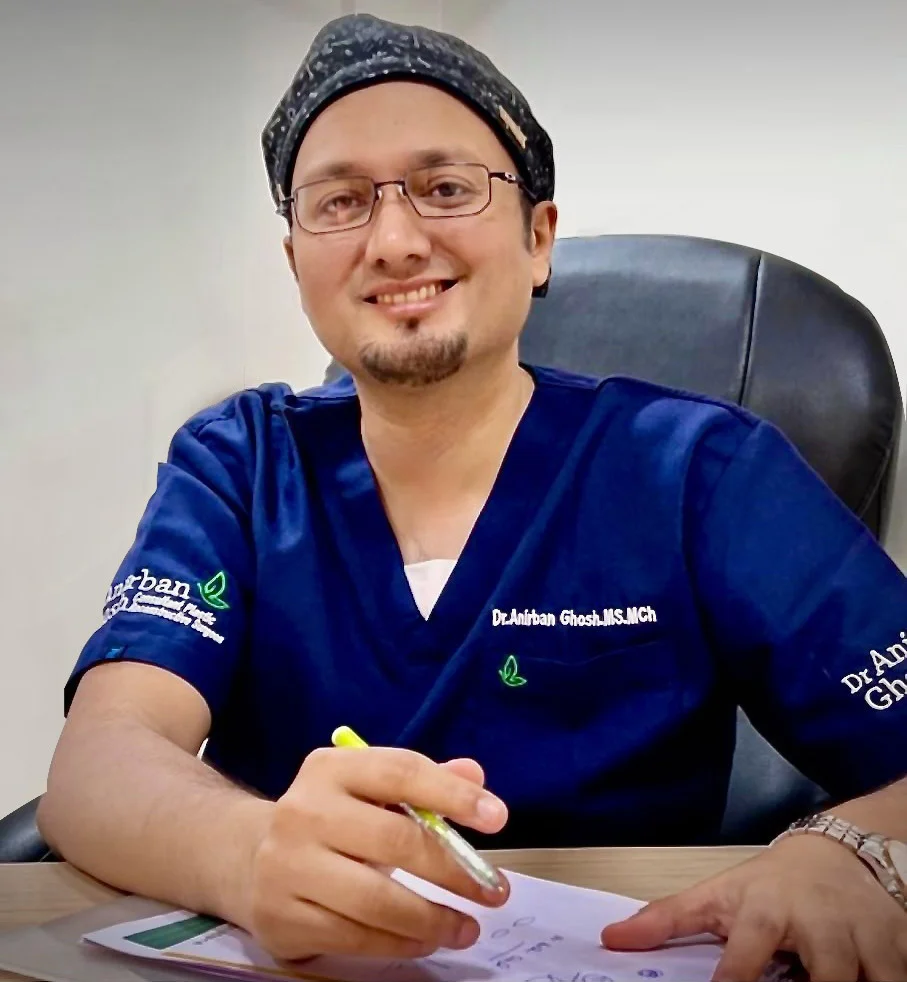
Breast Reconstruction Surgeon in Kolkata
Dr Anirban Ghosh — MCh Plastic Surgery | 15+ years | Anirvana Clinic, Ballygunge
Home / Surgical / Breast Reconstruction
What Is Breast Reconstruction?
A set of surgical techniques that restore breast shape, volume and symmetry after tissue has been removed or damaged. It is typically staged — the first operation builds the breast mound; later, smaller procedures refine contour, add the nipple and match the other side.
Reconstruction Is Not Cosmetic Surgery
- Cosmetic surgery alters a healthy breast by choice.
- Reconstruction replaces tissue lost to disease or injury.
- Major guidelines (NCCN, NICE NG101) treat reconstruction as part of breast cancer care, not an optional extra.
Insurance in India: many policies cover reconstruction when it is part of cancer treatment, but wording varies widely. Get written pre-authorisation from your insurer or TPA before surgery. Purely cosmetic symmetry procedures are more often excluded.
What Reconstruction Can and Cannot Restore
| Can restore | Cannot restore |
|---|---|
| Breast shape, volume and projection | Normal skin sensation (partial return only, over 1–2 years) |
| Symmetry in clothing and swimwear | The ability to breastfeed from that breast |
| A nipple-areola appearance (surgery + tattoo) | Erectile response of a reconstructed nipple |
| Body contour and posture balance | A breast identical to the original |
Who Is Breast Reconstruction For?
| Situation | Usual approach | Key considerations |
|---|---|---|
| After mastectomy for cancer | Implant, flap, or flap + implant | Most common indication; timing depends on radiotherapy plan |
| After lumpectomy / breast-conserving surgery | Oncoplastic reshaping, fat grafting | Best planned before the cancer operation |
| After risk-reducing (prophylactic) mastectomy | Often nipple-sparing + immediate reconstruction | For BRCA1/2 or high-risk family history; genetic counselling first |
| After trauma, burns or infection | Flap, expander, or staged reconstruction | Scar maturity usually needed before definitive surgery |
| Congenital conditions / Poland syndrome | Implant, fat grafting, latissimus dorsi flap | Often staged through adolescence into adulthood |
Who may need to delay reconstruction: active smokers, uncontrolled diabetes, BMI in the high-risk range, active infection, advanced or inflammatory cancer requiring urgent systemic treatment, significant heart or lung disease, or an unfinished chemotherapy/radiotherapy plan. Delay is usually temporary — most people become candidates once these are addressed.
Timing: Immediate, Delayed or Delayed-Immediate
| Timing | When it happens | Best suited to | Trade-offs |
|---|---|---|---|
| Immediate | Same operation as mastectomy | No radiotherapy planned; early-stage disease | Best skin preservation and aesthetics; one anaesthetic; complications could delay chemotherapy |
| Delayed | Months to years after cancer treatment ends | Radiotherapy given; advanced disease; undecided patients | Safest sequencing; more skin needed, so usually a flap; extra operation |
| Delayed-immediate | Tissue expander placed at mastectomy, definitive reconstruction after radiotherapy | Uncertain radiotherapy need | Preserves the skin envelope while keeping options open; more stages |
How timing is decided: in a multidisciplinary discussion with your breast/onco-surgeon, medical oncologist and radiation oncologist. Reconstruction should never delay chemotherapy or radiotherapy. The final pathology after mastectomy sometimes changes the radiotherapy plan, which is why delayed-immediate exists.
How Cancer Treatment Affects Your Reconstruction
Radiotherapy and Reconstruction: The Key Considerations
Radiotherapy is the single biggest factor. Radiated tissue heals less well and contracts. Implants in a radiated field carry a substantially higher risk of capsular contracture, malposition and implant loss than non-radiated implants. Where post-mastectomy radiotherapy is planned, autologous (flap) reconstruction is generally preferred, either delayed or delayed-immediate.
Chemotherapy Timing and Surgical Planning
Adjuvant chemotherapy typically begins around 4–6 weeks after surgery once wounds have healed. Elective reconstruction is not performed during a chemotherapy cycle; surgery is usually scheduled when blood counts have recovered.
Hormone Therapy and Healing
Tamoxifen has been associated in some studies with increased microvascular thrombosis risk. Many units pause it for a short window around free flap surgery. Aromatase inhibitors are generally continued. Follow your oncologist's instruction, not a general rule.
Working With Your Onco-Surgeon and Oncologist
The reconstructive plan is made jointly with your onco-surgeon, oncologist, radiation oncologist, radiologist and pathologist. Ask for the plan in writing.
Types of Breast Reconstruction
| Variant | What it involves | Suits |
|---|---|---|
Direct-to-implant (single stage) |
Implant placed at mastectomy | Good skin quality, small–moderate breasts, no radiotherapy |
Two-stage with tissue expander |
Expander inflated over weeks, then swapped for an implant | Tight or uncertain skin envelope, larger volume needed |
Pre-pectoral |
Implant above the chest muscle | Less pain, no animation deformity; needs good skin flaps and ADM support |
Sub-pectoral |
Implant partly under the chest muscle | Thin skin flaps; more post-op discomfort and animation with movement |
ADM and mesh: acellular dermal matrix or synthetic mesh acts as an internal sling to support and position the implant. It improves shape control but adds cost and, in some series, a modest increase in seroma and infection rates.
Autologous (Flap) Reconstruction
Uses your own skin, fat and sometimes muscle. Results feel and age more naturally, and tolerate radiotherapy far better.
| Flap | Donor site | Notes |
|---|---|---|
| DIEP | Lower abdomen | Gold-standard free flap; spares the rectus muscle, so lowest abdominal hernia/bulge risk. Requires microsurgery. |
| TRAM (pedicled or free) | Lower abdomen | Uses rectus muscle; higher risk of abdominal bulge, weakness or hernia than DIEP |
| Latissimus dorsi | Upper back | Reliable, often combined with an implant for volume; some back contour change and shoulder weakness |
| SGAP / IGAP | Buttock | For patients without adequate abdominal tissue |
| TUG / PAP | Inner or back of thigh | Suits smaller breasts; useful when abdomen is unavailable |
Free vs pedicled flap: a pedicled flap stays attached to its original blood supply and is tunnelled to the chest. A free flap is fully detached and its artery and vein are reconnected to chest vessels under an operating microscope — this is microsurgery, and it demands a surgeon with formal microsurgical training and a team trained in post-operative flap monitoring.
Other Techniques
Combined flap + implant — usually latissimus dorsi with an implant, when the flap alone cannot provide enough volume.
Fat grafting — fat harvested by liposuction and injected to smooth contour irregularities, thicken thin skin flaps or add small volume. Almost always staged; 30–50% of grafted fat typically resorbs, so repeat sessions are common.
Oncoplastic reconstruction after lumpectomy — the breast is reshaped using local tissue rearrangement or reduction techniques at the time of tumour removal, often with a matching procedure on the other side.
How the Right Technique Is Chosen for You
Decided by: your radiotherapy plan · available donor tissue and body habitus · breast size and degree of droop · smoking status and other health conditions · previous abdominal surgery · how many operations you are willing to undergo · recovery time you can afford · and your own priorities for feel, permanence and scarring.
Reconstructing the Nipple and Areola
Nipple reconstruction is usually performed 3–6 months after the breast mound has settled, using small local flaps (skate, CV or star flap) or a graft. Projection reduces over the first year — commonly by around half — so surgeons deliberately over-construct.
3D areola tattooing creates realistic colour, shading and the illusion of projection. It can be done alone, without surgery. Pigment fades and usually needs a top-up every few years.
Nipple-sparing mastectomy preserves your own nipple and areola and gives the best cosmetic result. Candidacy generally depends on tumour size and distance from the nipple, no clinical or imaging involvement of the nipple, absence of inflammatory cancer, and breast size and droop. Your onco-surgeon decides this on oncological grounds, and the nipple margin is checked on frozen section or final pathology.
Non-surgical alternative: stick-on prosthetic nipples.
Why Choose Dr Anirban Ghosh?
About the Surgeon
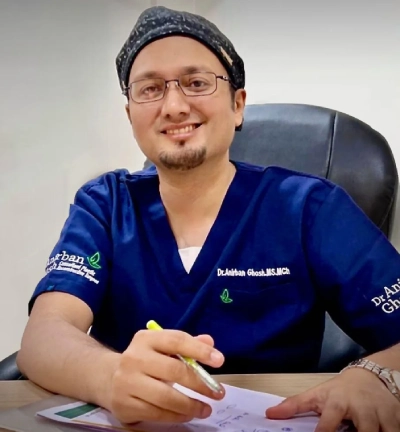
Dr. Anirban Ghosh
- MBBS (Gold Medallist)
- MS (General Surgery)
- MRCS (England)
- MCh (Aesthetic Plastic Surgery)
15+ Years of Experience
in aesthetic & reconstructive plastic surgery
50000+ Patients
Affiliations
- Indian Association of Aesthetic Plastic Surgeons (IAAPS)
- The Association of Plastic Surgeons of India (APSI)
Awards & Recognitions
- Honoured with the Indian Icon Best Healthcare Entrepreneur Award
- Esteemed Recipient of the Rabindra Ratna Puraskar 2025
Achieving Symmetry With the Other Breast
The opposite breast may need a lift (mastopexy), reduction or augmentation to match the reconstructed side.
Usually performed as a second-stage procedure, around 3–6 months after the main reconstruction, once swelling has settled and the reconstructed breast has reached its final position.
Occasionally done at the same time as immediate reconstruction when the match is predictable.
Any surgery on a natural breast requires its own imaging follow-up and, in some policies, is treated as cosmetic for insurance purposes. Clarify this in advance.
Your Consultation and Pre-Operative Assessment
What to Bring: Reports, Imaging and Treatment Plan
- Biopsy and histopathology reports · receptor status (ER/PR/HER2)
- Mammogram, ultrasound, MRI, PET-CT reports and images
- Your oncologist's written treatment plan, including whether radiotherapy is planned
- Full medication list, including blood thinners, supplements and hormone therapy
- Previous surgery and anaesthetic records
- Insurance policy details and TPA contact
Questions to Ask Before You Decide
- How many of this specific procedure do you perform each year, and what are your complication and revision rates?
- Are you formally trained in microsurgery, and who monitors the flap overnight?
- How many operations will my complete plan involve, and over what timeframe?
- What happens if the flap fails or the implant becomes infected?
- What will this cost in total, including revisions, and what will insurance cover?
- Can I see before-and-after photographs of patients with a similar build and cancer stage?
Informed consent should be a documented conversation covering the realistic result, the likelihood of needing revision surgery, and the specific risks below — not a signature on a form at admission.
How to Prepare for Surgery
| Preparation | Why it matters |
|---|---|
| Stop smoking and all nicotine (including vapes and patches) — typically 4–6 weeks before and 4 weeks after |
Nicotine constricts small blood vessels. Smoking is the strongest modifiable predictor of skin flap necrosis, fat necrosis, wound breakdown and flap loss. Many surgeons will not perform free flap reconstruction on an active smoker. |
| Review medications with your surgeon and physician | Blood thinners, aspirin, NSAIDs, some supplements (fish oil, vitamin E, ginkgo) and hormone therapy may need pausing on a specific schedule. Never stop prescribed medication on your own. |
| Optimise health | Control blood sugar and blood pressure; correct anaemia; maintain nutrition and protein intake; stay lightly active. |
| Prepare home and support | Arrange 2–4 weeks of help, front-opening clothing, pillows for positioning, a raised chair, and someone to manage drains. Post-flap surgery you cannot lift or drive for several weeks. |
What Happens During Surgery
Anaesthesia: general anaesthesia throughout, with continuous monitoring, warming, urinary catheter for longer cases, and clot-prevention measures. Nerve blocks or ERAS protocols are often used to reduce opioid need.
Implant-based: the mastectomy is completed by the onco-surgeon; the plastic surgeon assesses skin flap viability, creates the pocket above or below the muscle, positions ADM or mesh if used, places the implant or expander, and inserts drains.
Flap-based: tissue is raised from the donor site with its blood vessels, the donor site is closed (with mesh reinforcement if needed), the flap is transferred to the chest, and — for a free flap — the artery and vein are joined to chest vessels under the microscope. The flap is then shaped and inset.
Flap monitoring: the first 48–72 hours are critical, when the risk of a clot at the join is highest. The flap is checked hourly at first — colour, temperature, capillary refill, and often a Doppler or implanted probe. If circulation fails, an urgent return to theatre within hours offers the best chance of saving the flap. This is why a 24-hour trained nursing team matters as much as the surgeon.
| Technique | Typical operating time | Typical hospital stay |
|---|---|---|
| Tissue expander / direct-to-implant (unilateral) |
1.5–3 hours | 1–2 days |
| Latissimus dorsi + implant | 3–5 hours | 2–4 days |
| DIEP flap (unilateral) | 6–8 hours | 4–7 days |
| DIEP flap (bilateral) | 8–12 hours | 5–7 days |
| Nipple reconstruction / fat grafting | 45–120 minutes | Day case or overnight |
Times are typical ranges and vary by patient and unit.
Recovery After Breast Reconstruction
| Milestone | Implant-based | Flap (DIEP/TRAM) |
|---|---|---|
| Out of bed | Day 1 | Day 1–2 |
| Drains removed | 1–2 weeks | 1–3 weeks (chest and donor site) |
| Desk work / light duties | 3–6 weeks | 6–8 weeks |
| Driving | 2–4 weeks | 4–6 weeks |
| Lifting, gym, heavy work | 6–8 weeks | 8–12 weeks |
| Final shape settled | 3–6 months | 6–12 months |
Drains at home: record output daily; drains usually come out when output falls below roughly 30 ml in 24 hours for two consecutive days. Watch for redness, foul smell, fever or sudden increase in output.
Donor site care: abdominal flaps mean a hip-to-hip scar, temporary tightness, and a period of walking slightly bent. An abdominal binder and avoidance of straining protect the repair. Back flap donor sites are prone to seroma and may need repeated aspiration.
Arm movement and physiotherapy: gentle range-of-motion exercises usually start within days under guidance, progressing over 6–8 weeks. This reduces stiffness, cording and shoulder problems — particularly important if you have had axillary surgery.
Scars continue to fade and soften for 12–18 months. Numbness over the reconstructed breast is expected and only partially recovers.
Risks and Complications
Every operation carries risk. Rates below are broad ranges from published series; ask your surgeon for their own figures.
| Complication | Approximate frequency | What to know |
|---|---|---|
| Infection | 2–10% (higher with implants) | May require antibiotics; implant infection can mean implant removal |
| Bleeding / haematoma | 1–5% | May need a return to theatre |
| Seroma | Common, especially latissimus dorsi donor sites | Usually managed by aspiration |
| Mastectomy skin flap necrosis | 5–15% | Strongly linked to smoking, large breasts, thin flaps |
| Total free flap loss | ~1–3% in experienced microsurgical units | Rare but serious; usually occurs in the first 72 hours |
| Partial flap loss | Higher than total loss | May require debridement or revision |
| Fat necrosis | ~5–15% | Firm lumps in the flap; needs imaging to distinguish from recurrence |
| Donor site hernia / bulge / weakness | Low with DIEP; higher with TRAM | Mesh reinforcement reduces risk |
| Capsular contracture | Markedly increased after radiotherapy | Graded Baker I–IV; severe cases need capsulectomy or conversion to a flap |
| Implant rupture | Increases with implant age | Silicone rupture is often silent — hence imaging surveillance |
| BIA-ALCL | Rare; associated with textured implants | A lymphoma, not breast cancer. Typically presents as late swelling/seroma more than a year after surgery — often around 8–10 years. Highly treatable when caught early. Report any new late swelling promptly. |
| Loss of sensation | Near-universal after mastectomy | Partial return over 1–2 years; sensory nerve repair techniques are emerging |
| DVT / pulmonary embolism | Low, but real in long operations | Reduced by compression devices, early mobilisation, anticoagulation |
| Asymmetry / need for revision | Common | Most people undergo at least one refinement procedure. Plan for it. |
Seek urgent medical attention for fever, spreading redness, wound discharge, sudden breast swelling or colour change, calf pain or swelling, chest pain or breathlessness.
Living With Your Reconstruction
Cancer surveillance: a breast reconstructed after mastectomy does not usually need routine mammography — surveillance is by clinical examination, with ultrasound or MRI to investigate any new lump. Your natural breast continues its normal screening schedule. New lumps in a flap are often fat necrosis, but must always be imaged.
Implant surveillance: for silicone implants, imaging (MRI or ultrasound) to detect silent rupture is recommended from around 5–6 years after placement and every 2–3 years thereafter. Confirm the current schedule with your surgeon.
Lymphoedema results from axillary lymph node surgery and radiotherapy, not from the reconstruction itself. Sentinel node biopsy carries lower risk than full axillary clearance. Early referral to a lymphoedema therapist, skin care, and prompt treatment of arm infections matter more than avoiding blood pressure cuffs.
Sensation and intimacy: the reconstructed breast will feel different to touch, and this is a common source of distress that is rarely discussed openly. Raise it — it is a legitimate clinical concern, and counselling or psychosexual support helps.
Bras and clothing: wear the prescribed post-surgical or soft bra initially; get professionally fitted at around 3 months. Underwire is usually avoided until scars mature.
Emotional recovery: low mood, grief and altered body image are normal and treatable. Ask for a referral to onco-psychology or a breast cancer support group.
Follow-up: typically at 1–2 weeks, 6 weeks, 3 months, 6 months, then annually — alongside your oncology follow-up.
Choosing a Breast Reconstruction Doctor in Kolkata
Microsurgical training is not optional for flap work. DIEP and other free flaps require formal fellowship training, magnification, and regular case volume. Ask directly about training, annual volume and flap loss rate.
Questions that reveal real experience: How many DIEP flaps did you do last year? What is your flap salvage rate? Who monitors flaps overnight? How many revisions does a typical patient need? Can I speak to a previous patient?
The multidisciplinary team matters more than any individual. Look for a unit where the onco-surgeon, plastic surgeon, medical and radiation oncologists, radiologist, pathologist, physiotherapist and onco-psychologist plan together — and where 24-hour ICU and blood bank support exist for long microsurgical cases.
Verify NMC/State Medical Council registration and MCh (Plastic Surgery) qualification. Registration status is publicly searchable.
Visiting Our Clinic in Kolkata
Anirvana Clinic
8/29 Fern Road, Ballygunge Gardens, Gariahat Kolkata, West Bengal 700019
Phone
+91 6289109687
Consultation hours
| Day | Hours |
|---|---|
| Monday | 10:00 am – 10:30 pm |
| Tuesday – Saturday | 9:00 am – 9:30 pm |
| Sunday | Closed |
Hours may vary on public holidays.
Areas served
Patients travel to the Ballygunge clinic from Gariahat, Ballygunge, Dhakuria, Rashbehari, Kasba, Jadavpur, Tollygunge, Alipore, Park Street, Salt Lake, New Town, Behala, Howrah and across South and North Kolkata — as well as from Durgapur, Asansol, Siliguri and other districts of West Bengal, and from Bihar, Jharkhand, Odisha and Assam.
Travelling from outside Kolkata? Discuss the follow-up schedule before booking travel.
Frequently Asked Questions (FAQs)
Is breast reconstruction covered by insurance in India?
Often yes when performed as part of breast cancer treatment, but coverage varies by policy and insurer. Get written pre-authorisation before surgery. Symmetry procedures on the healthy breast are more frequently excluded.
Does reconstruction increase the risk of cancer coming back?
No. Reconstruction does not increase recurrence risk and does not hide a recurrence — recurrences typically appear in the skin or chest wall, where they remain detectable.
Will reconstruction delay my chemotherapy?
It should not. A straightforward recovery allows chemotherapy to start on schedule, usually around 4–6 weeks after surgery. A significant complication can cause delay, which is one reason surgeons decline immediate reconstruction in higher-risk patients.
I need radiotherapy. Can I still have reconstruction?
Yes. The plan changes rather than disappears — usually a flap-based reconstruction, done delayed or as delayed-immediate with a temporary expander.
What is a DIEP flap and why is it recommended?
A DIEP flap uses skin and fat from your lower abdomen, transferred with its blood vessels reconnected under a microscope. It spares the abdominal muscle, so abdominal weakness and hernia risk are lower than with a TRAM flap. It feels natural and tolerates radiotherapy well.
How long will I be in hospital?
Roughly 1–2 days for implant-based reconstruction and 4–7 days for a DIEP flap.
How many operations will I need in total?
Most complete plans involve 2–3 procedures: the breast mound, then symmetry and contour refinement, then the nipple and tattoo.
Can I have reconstruction years after my mastectomy?
Yes. Delayed reconstruction can be performed many years later, provided cancer treatment is complete and you are fit for surgery.
Will my reconstructed breast have normal sensation?
No. Significant numbness is expected after mastectomy. Some sensation returns over 1–2 years, and nerve-repair techniques may improve this, but normal sensation is not restored.
Can I breastfeed after reconstruction?
Not from a reconstructed breast after mastectomy. Breastfeeding from a preserved natural breast may be possible.
Are silicone implants safe?
Modern cohesive silicone implants are regulated and widely used. Known risks include rupture, capsular contracture and the rare BIA-ALCL associated with textured implants. Implants are not lifetime devices and may need replacement.
What is BIA-ALCL?
A rare lymphoma of the tissue capsule around textured implants — not breast cancer. It usually presents as late breast swelling more than a year after surgery and is highly treatable when identified early.
Will I still need mammograms?
Your natural breast, yes. A reconstructed breast after mastectomy is generally followed by clinical examination, with ultrasound or MRI for any new concern.
When can I return to work?
Around 3–6 weeks for desk work after implant reconstruction; 6–8 weeks or longer after a flap. Physical jobs take longer.
What does breast reconstruction cost in Kolkata?
Cost depends on the technique, implant or mesh used, operating time, hospital category and length of stay. A DIEP flap costs considerably more than an implant reconstruction. Contact the clinic for a written estimate covering the full staged plan.
Request An Appointment
Visit us
Anirvana Clinic
Ballygunge, Kolkata — just off Rash Behari Avenue
References and Medical Sources
- National Comprehensive Cancer Network (NCCN) — Clinical Practice Guidelines in Oncology: Breast Cancer.
- National Institute for Health and Care Excellence (NICE) — NG101: Early and locally advanced breast cancer: diagnosis and management.
- American Society of Plastic Surgeons (ASPS) — Evidence-based clinical practice guidelines on breast reconstruction.
- Association of Breast Surgery / BAPRAS — Oncoplastic breast reconstruction guidelines.
- U.S. Food and Drug Administration — Breast implant safety information, labelling requirements and rupture screening recommendations.
- American Society of Breast Surgeons — Consensus statements on nipple-sparing mastectomy and BIA-ALCL.
- Cochrane Database of Systematic Reviews — Immediate versus delayed breast reconstruction.
- Insurance Regulatory and Development Authority of India (IRDAI) — Health insurance standardisation guidelines.