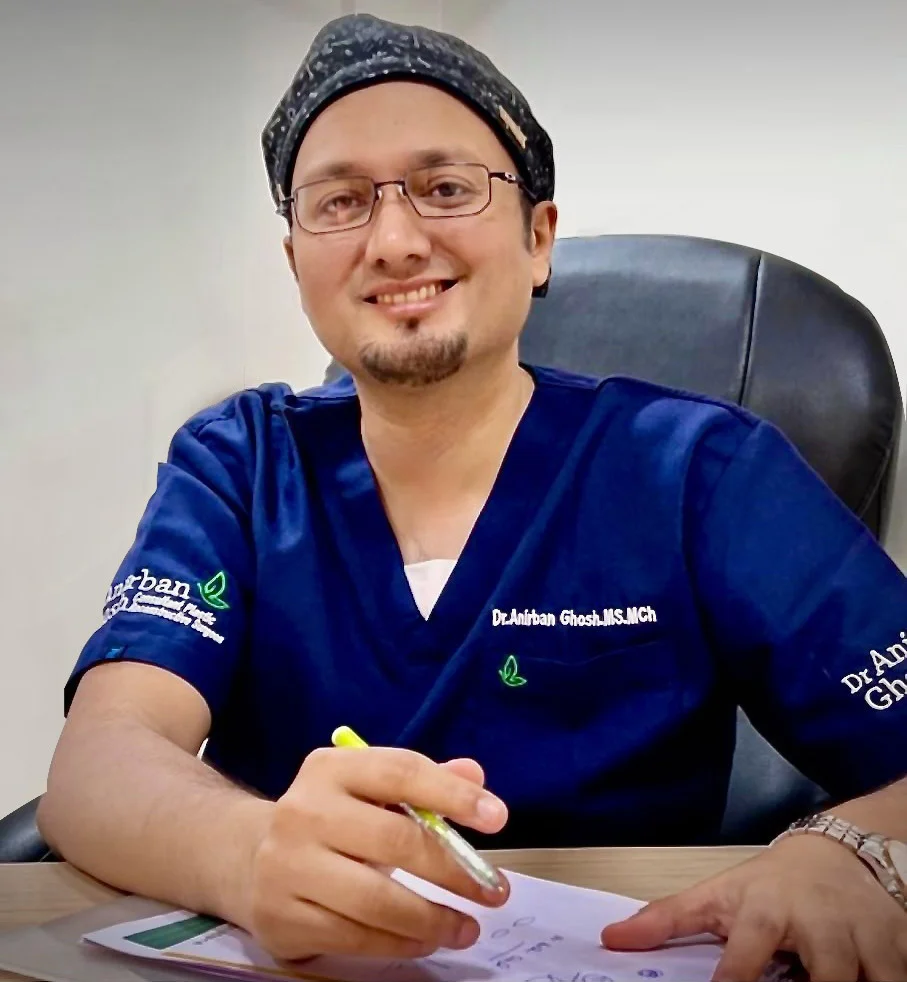
Breast Augmentation (Breast Enlargement) Surgeon in Kolkata
Dr Anirban Ghosh — MCh Plastic Surgery | 15+ years | Anirvana Clinic, Ballygunge
Home / Surgical / Breast Augmentation
What is Breast Augmentation (Breast Enlargement)?
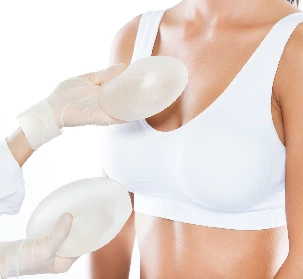
Breast augmentation — also called breast enlargement, and informally a "boob job" — is surgery that increases breast size, improves breast shape, or restores volume lost after pregnancy or weight loss. It is performed with breast implants (silicone or saline), with fat transfer using your own fat, or with both together as a hybrid procedure. Surgery takes one to two hours under general anaesthesia, and most patients return to desk work within one to two weeks.
| Techniques | Implants - fat transfer - hybrid (implant + fat) |
| Anaesthesia | General |
| Duration | 1–2 hours for implants; 2–4 hours if fat transfer is combined |
| Hospital stay | Day care or one overnight, confirmed case by case |
| Back to desk work | Typically 1–2 weeks |
| Chest and upper-body exercise | At least 6 weeks, confirmed at follow-up |
| Final shape settles | 3–6 months |
| Do implants last a lifetime? | No. Implants are not lifetime devices |
| Surgeon | Dr Anirban Ghosh, MCh — Anirvana Clinic, Ballygunge, Kolkata |
Implants vs. Fat Transfer: The First Decision
Before choosing an implant type or size, the first question is whether implants, fat transfer, or a hybrid of both suits your anatomy and goals. In short: implants provide a larger, more predictable increase; fat transfer provides a smaller, softer, device-free increase and requires sufficient donor fat to harvest.
| Breast implants | Fat transfer | Hybrid | |
|---|---|---|---|
| Realistic increase | One to several cup sizes | Usually up to about one cup size per session | Moderate to large |
| Predictability | High | Moderate — some fat is reabsorbed | High volume, softer edges |
| Permanent device | Yes | No | Yes |
| Needs donor fat | No | Yes — abdomen, flanks or thighs | Yes, less |
| Contours a second area | No | Yes, via liposuction | Yes |
| May need a second session | Uncommon | Sometimes | Sometimes |
| BIA-ALCL association | Only with textured shells | None | Only with textured shells |
| Long-term imaging | Yes, for silicone | Standard breast screening | Yes |
Implants suit you if you want a significant, predictable increase of more than one cup size, have limited donor fat, or want a specific projection that fat alone cannot reliably produce.
Fat transfer suits you if you want a modest, natural-feeling increase, would also like fat reduced elsewhere, and prefer to avoid a permanently implanted device. See our fat grafting page for wider applications.
Hybrid augmentation combines a smaller implant with fat grafted over it, to soften implant edges, add upper-pole fullness, or achieve a result neither technique produces alone.
Who is a Suitable Candidate?
You may be a candidate for breast augmentation if you are in good general health, have fully developed breast tissue, do not smoke or will stop for a defined period, are not pregnant or breastfeeding, and hold expectations that have been discussed and calibrated at consultation.
Common Reasons Patients Choose Enlargement
- Naturally small breast volume relative to your frame
- Visible asymmetry between the two breasts
- Volume loss after pregnancy or breastfeeding, often addressed within a mommy makeover
- Volume loss after significant weight reduction, often alongside body contouring
- Rebuilding a breast after mastectomy — see breast reconstruction
- Chest feminisation as part of gender-affirming surgery
Where volume loss has come with sagging, augmentation alone will not lift the breast — a breast lift may be needed as well. If your concern is excess volume rather than too little, see breast reduction.
Minimum Age and Timing Considerations
Breast tissue should be fully developed before elective augmentation. Development usually stabilises in the late teens but can continue into the early twenties.
As an international reference point, the U.S. FDA approves saline implants for cosmetic augmentation from age 18 and silicone gel implants from age 22, with no minimum age for reconstruction. These are United States device approvals and do not apply as law in India, where elective cosmetic surgery requires you to be a consenting adult. In practice we assess breast maturity individually rather than by birthday alone.
If you are planning a pregnancy, raise it at consultation. Pregnancy and breastfeeding after augmentation are covered further down this page.
Who Should Postpone or Avoid Surgery
Postpone or reconsider breast augmentation if you are:
- Currently pregnant or breastfeeding
- Managing an active infection anywhere in the body
- Living with uncontrolled diabetes or another unmanaged medical condition
- Affected by a bleeding disorder, or taking anticoagulation that cannot be safely paused
- Living with a severe connective tissue or autoimmune condition — discuss individually, as this is not an automatic exclusion
- Holding expectations that have not been discussed at consultation
If you have a personal or strong family history of breast cancer, say so explicitly. It does not automatically rule out augmentation, but it changes your imaging and monitoring plan.
Why Smoking Must Stop Before Surgery
Smoking and nicotine in any form — cigarettes, vaping, and nicotine replacement products — constrict small blood vessels and significantly impair wound healing. This raises the risk of skin and nipple complications, delayed healing, wound breakdown, and poor scarring. A smoke-free window is required before and after surgery, commonly in the region of four to six weeks either side, with your exact timeline confirmed at your pre-operative appointment.
Choosing Your Breast Implant
The right implant comes from four separate decisions: fill material (silicone or saline), shell surface (smooth or textured), shape (round or anatomical), and profile (how far it projects). Each is decided against your measurements, tissue quality and goals.
Silicone vs. Saline
Silicone vs. Saline Implants
| Silicone gel | Saline | |
|---|---|---|
| Filled with | Cohesive silicone gel, pre-filled | Sterile saline, usually filled after insertion |
| Feel | Closer to natural breast tissue | Firmer; more prone to rippling in thin tissue |
| Incision length | Longer, as it arrives pre-filled | Can be shorter, as it is filled in place |
| Signs of rupture | Often silent; needs imaging to detect | Obvious — the breast visibly deflates |
| If it ruptures | Gel usually stays within the scar capsule | Saline is safely absorbed by the body |
| Routine rupture imaging | Yes — see the schedule below | Not routinely needed |
| Popularity in India | Most commonly chosen | Less commonly requested |
Cohesive Gel ("Gummy Bear") Implants
"Gummy bear" implants are not a separate category from silicone implants — they are silicone implants, made with a more highly cross-linked, form-stable gel that holds its shape even if the shell is cut, rather than flowing like standard cohesive gel. They are usually anatomically shaped. Treat them as one option within the silicone family, not an alternative to it.

Smooth vs. Textured Surface — and Why Texture Matters
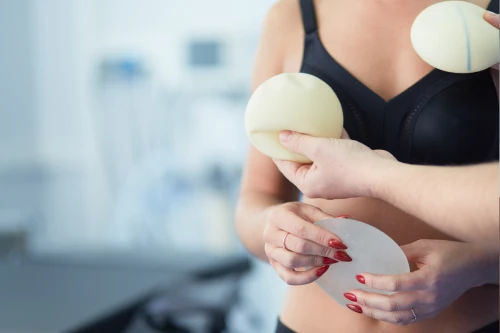
Texturing was developed to reduce implant rotation, which is essential for shaped implants, and was associated in some studies with lower rates of capsular contracture. However, textured shells — particularly macro-textured designs — have been linked to Breast Implant-Associated Anaplastic Large Cell Lymphoma (BIA-ALCL), a rare lymphoma of the immune system.
One point is widely misreported and worth stating clearly: not all textured implants have been withdrawn. In July 2019, Allergan issued a worldwide recall of its BIOCELL macro-textured implants and tissue expanders at the FDA's request. Smooth implants and micro-textured devices from various manufacturers were not part of that recall and remain in use. If a textured or shaped device is genuinely right for your anatomy, we discuss the current evidence for that specific device before you consent.
Round vs. Anatomical (Teardrop) Shape
| Round | Anatomical (teardrop) | |
|---|---|---|
| Upper-pole fullness | More | Less — tapers upward |
| If it rotates | Little visible change, as it is symmetrical | Visibly distorted |
| Shell required | Smooth or textured | Must be textured |
| Use today | Most commonly used | Chosen selectively; less often than a decade ago |
Understanding Implant Profile
Profile describes how far an implant projects forward relative to its base width — commonly low, moderate, moderate-plus, high, and extra-high. A narrower chest paired with a higher-profile implant achieves more projection without excessive width.
Why Choose Dr Anirban Ghosh?
About the Surgeon
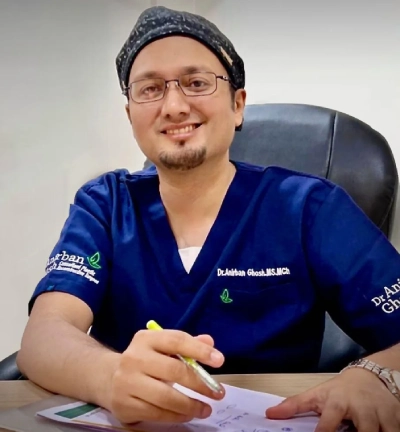
Dr. Anirban Ghosh
- MBBS (Gold Medallist)
- MS (General Surgery)
- MRCS (England)
- MCh (Aesthetic Plastic Surgery)
15+ Years of Experience
in aesthetic & reconstructive plastic surgery
50000+ Patients
Affiliations
- Indian Association of Aesthetic Plastic Surgeons (IAAPS)
- The Association of Plastic Surgeons of India (APSI)
Awards & Recognitions
- Honoured with the Indian Icon Best Healthcare Entrepreneur Award
- Esteemed Recipient of the Rabindra Ratna Puraskar 2025
What Size Implant Is Right for You?
Implant size is measured in cubic centimetres (cc) of fill volume, not in bra cup sizes. Cup size varies between brands and depends on your existing tissue and frame, so it cannot reliably communicate a target. At consultation, we translate your goals into a cc range from your actual measurements.
Base Width and Chest Measurement
The implant's base width should broadly match your chest wall and existing breast base width. An implant too wide for your chest — even at a modest cc volume — tends to sit unnaturally, with palpable edges and excess fullness towards the armpit. This is measured directly during examination.

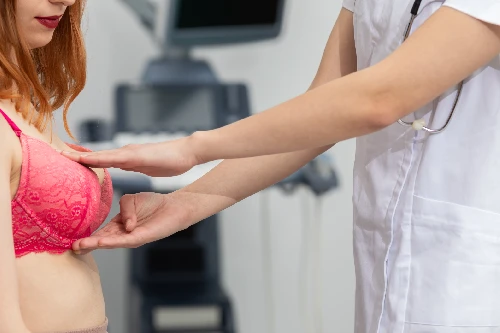
Sizers and 3D Simulation at Consultation
Physical implant sizers, and 3D imaging simulation where available, let you preview different volumes and profiles on your own frame before deciding. For patients unsure what they want, this is usually the most useful part of the consultation. You can also review real outcomes in our before and after gallery.
Why Bigger Is Not Always Better
Choosing a size beyond what your tissue and chest wall can support increases the risk of tissue stretching, bottoming out, rippling, and long-term sagging that eventually needs corrective surgery. The goal is the largest size your frame can safely carry — not the largest size available.
Implant Placement: Which Plane?
Where the implant sits relative to your chest muscle is one of the two central surgical decisions, the other being incision choice. There is no single best plane — it depends largely on how much of your own tissue is available to cover the implant.
| Plane | Where it sits | Main advantage | Main trade-off |
|---|---|---|---|
| Subglandular | Under breast tissue, over the muscle | Quicker recovery; no animation distortion | Edges more visible or palpable in thin tissue |
| Submuscular | Fully under the pectoral muscle | More soft-tissue coverage; often more natural in thinner patients | Risk of animation deformity when the muscle flexes |
| Dual plane | Upper part under muscle, lower under gland | Upper-pole coverage with a natural lower-pole fold | Some animation possible, less than full submuscular |
| Subfascial | Over the muscle, under its fascia | Slightly more coverage than subglandular | Used selectively; the gain is modest |
Your plane is chosen from how much natural breast tissue covers the implant, your chest wall shape, whether your activities involve heavy pectoral use such as gym training, swimming or martial arts, and the look you want. This is decided individually, not applied as a default.
Incision Options and Scar Placement
Every breast augmentation leaves a permanent scar. The three standard approaches differ in where that scar sits and how much surgical access they allow.
| Incision | Scar location | Access and control | Considerations |
|---|---|---|---|
| Inframammary | Crease under the breast | Best direct access for precise pocket creation | Most commonly used; scar sits hidden in the fold |
| Periareolar | Lower edge of the areola | Good access | Theoretically higher risk to nipple sensation and milk ducts |
| Transaxillary | Armpit, using an endoscope | More limited precision | Keeps scars off the breast; not suitable for every implant |
Scar Healing and Management in Indian Skin
Indian and other deeply pigmented skin types carry a higher baseline risk of hypertrophic scarring and keloid formation than fairer skin types. This is a genuine planning factor rather than a footnote: it influences incision choice, closure technique, and your scar care protocol — silicone gel or sheeting, sun protection, and in selected cases early intervention if a scar begins to thicken. Your individual scarring risk and management plan are discussed before surgery.
Fat Transfer Breast Augmentation
Fat transfer breast augmentation harvests your own fat by liposuction, processes it, and re-injects it into the breast in small aliquots. It typically achieves an increase of up to around one cup size per session in patients with adequate donor fat, and avoids any permanently implanted device.
How Much Volume Can Realistically Be Gained
Only a proportion of transferred fat survives long term — commonly cited in the region of half to two-thirds, varying by patient and technique — and overfilling risks fat necrosis. Patients wanting a larger single-session increase are usually better served by implants or a hybrid approach.
Donor Sites and Fat Survival Rates
Fat is harvested from the abdomen, flanks or thighs by liposuction, processed, and injected in small aliquots to maximise contact with blood supply. Because some fat is reabsorbed over the following months, the final result is assessed at around three to six months, not immediately after surgery.
Advantages and Limitations
Advantages: no permanently implanted device, no BIA-ALCL association, and simultaneous contouring of the donor area.
Limitations: a smaller achievable increase, dependence on adequate donor fat, the possibility of needing more than one session, and a small risk of oil cysts or fat necrosis.
Effect on Future Mammograms
Fat grafting can produce oil cysts or areas of fat necrosis with calcification that appear on mammography. An experienced radiologist can usually distinguish these from cancer-related findings, but you must always tell your radiographer you have had fat transfer to the breast so your imaging is interpreted correctly and additional views taken if needed.
Hybrid Augmentation: Implant Plus Fat
Hybrid augmentation combines a typically smaller implant with fat grafted over its visible or palpable edges, most often the upper pole and cleavage. It softens the implant's transition into natural tissue and builds contour that neither technique produces well alone. It carries the combined considerations of both procedures and is planned individually.
Your Consultation and Pre-Operative Workup
Your consultation covers examination and measurement, standardised photography, implant or fat transfer selection, a full risk discussion, and written informed consent — completed well before your surgery date, never on the day.
Examination, Measurements and Photography
Physical examination, chest and breast measurements including base width, nipple-to-fold distance and skin quality assessment, and standardised photography used for planning and for before-and-after comparison.
Baseline Breast Imaging and Screening
Depending on your age and risk factors, baseline ultrasound or mammography may be recommended, both to confirm normal breast tissue beforehand and to establish a reference point for future implant-related imaging.
Blood Tests and Anaesthetic Fitness
Standard pre-operative blood work and an anaesthetic fitness assessment are completed before surgery is scheduled, confirming you are medically fit for general anaesthesia.
Informed Consent and Realistic Expectations
We walk through a fully informed consent process, set realistic expectations for your specific anatomy, and answer every question before you commit to a date. You will never be asked to sign consent on the day of surgery without having had this discussion in advance.
How to Prepare for Surgery
Medications and Supplements to Stop
Aspirin, other blood-thinning medications, certain anti-inflammatories, and some supplements including fish oil, vitamin E, ginkgo and ginseng increase bleeding risk and must be stopped before surgery. You will be given a specific list and timeline at your pre-operative appointment. Do not stop prescribed cardiac or anticoagulant medication without instruction from the doctor who prescribed it.
Arranging Recovery Support
Arrange for someone to take you home after surgery and help at home for the first day or two. You will not be able to drive or lift anything heavy immediately afterwards.
What to Bring on the Day
Your surgical bra if provided in advance, loose front-opening clothing, your pre-operative paperwork and imaging, and a list of your current medications.
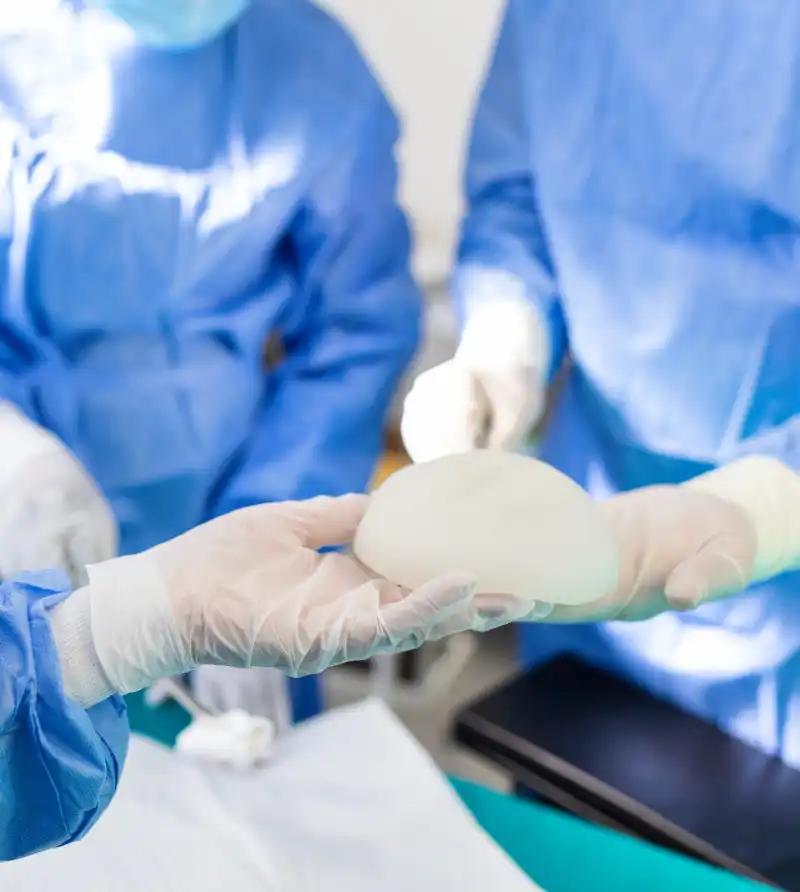
The Breast Augmentation Procedure Step by Step
Anaesthesia and Monitoring
General anaesthesia with continuous monitoring by a qualified anaesthesia team.
Surgical Markings
Precise markings on the breast and chest wall based on your measurements, made with you upright before you go to sleep, confirming incision location, pocket boundaries and midline reference points.
Incision
Inframammary, periareolar or transaxillary, as agreed at consultation.
Pocket Creation
In the chosen plane, sized precisely to the implant, with meticulous control of bleeding.
Implant Insertion and Positioning
Placed and positioned with close attention to symmetry between the two sides.
Symmetry Check
Before closing, you are placed in a seated or semi-upright position to confirm symmetry.
Closure
Incisions closed in layers.
Duration and stay: typically one to two hours for implants alone, longer if fat transfer is combined. Most patients go home the same day or after one overnight stay, confirmed for your specific case rather than quoted as a fixed rule.
Recovery Timeline After Breast Augmentation
Most patients return to light daily activity within a week and to desk work within one to two weeks, with upper-body exercise restricted for at least six weeks. Final shape settles at around three to six months.
| Stage | What to expect |
|---|---|
| First 48 hours | Swelling, tightness and discomfort managed with prescribed medication; surgical support bra worn from the operating room |
| Week 1 | Light daily activities resume; no heavy lifting, driving or strenuous activity; bruising and swelling begin to reduce |
| Weeks 2–3 | Swelling settles; breasts start to look and feel more natural; most patients return to non-strenuous desk work |
| Weeks 4–6 | Most light exercise restrictions lifted; upper-body and chest-specific exercise needs longer, confirmed at follow-up |
| Months 3–6 | Implants settle into final position as swelling resolves and tissue relaxes; final shape and feel assessed |
When to Contact Us Urgently
Contact the clinic immediately if you experience:
Sudden swelling on one side, or a rapid change in breast size or shape
Fever, spreading redness, warmth, or discharge from the incision
Pain that is worsening rather than improving, or not controlled by prescribed medication
Calf pain, swelling, breathlessness or chest pain — possible signs of a blood clot, requiring emergency assessment

Risks and Complications You Should Understand
Every operation carries risk. Breast augmentation carries an additional set of risks because it involves a long-term implanted device. We believe patients should understand all of them before consenting, not only the common ones.
Common, Expected Side Effects
Swelling, bruising, temporary tenderness and some asymmetry during early healing are expected and typically resolve within the recovery timeline above.
Bleeding, Haematoma and Seroma
A haematoma, meaning a collection of blood, or a seroma, a collection of fluid, can develop around the implant and occasionally requires drainage. Sudden one-sided swelling or significant pain after the first day or two should be reported immediately.
Infection and Implant Loss
Infection around an implant is uncommon, but if it does not respond to antibiotics, it may require temporary or permanent implant removal. Signs include increasing redness, warmth, fever or worsening pain.
Capsular Contracture
The body forms a scar capsule around any implant. In some patients this capsule tightens and hardens, causing firmness, distortion or discomfort, and sometimes requiring surgical correction. It can occur at any point after surgery, including years later, and is among the most frequent reasons patients need further surgery.
Implant Rupture and Silent Rupture
Implants can rupture from trauma or simply over time, and rupture rates rise as implants age.
- Saline rupture is immediately obvious — the breast deflates, and the saline is safely absorbed.
- Silicone rupture is frequently silent — the cohesive gel often stays contained within the scar capsule with no visible change.
This is precisely why periodic imaging is recommended rather than relying on how the breast looks or feels.
Rippling, Malposition, Double Bubble and Symmastia
Visible or palpable rippling of the implant edge, implant shifting out of position, a "double bubble" where the natural fold and the implant fold appear as two separate creases, and symmastia where implants meet in the midline and cleavage definition is lost, are all recognised complications that may require revision surgery.
Animation Deformity
With submuscular or dual-plane placement, flexing the chest muscle can visibly distort or move the breast, because the muscle sits partly over the implant. This is a known trade-off of under-the-muscle placement and is discussed as part of plane selection.
Changes in Nipple Sensation
Increased, decreased, or rarely permanently altered nipple and skin sensation can occur, related to incision choice and individual nerve anatomy.
Breast Implant Illness: An Honest Discussion
Some patients with breast implants report a cluster of systemic symptoms including fatigue, joint and muscle pain, brain fog and rash, commonly referred to as Breast Implant Illness (BII). BII is not currently a formally defined medical diagnosis with agreed diagnostic criteria, and the scientific evidence connecting these symptoms specifically and causally to implants remains contested and under study.
What is not contested is that patients report these symptoms, that regulators now require systemic symptoms to be included in pre-operative patient information, and that some patients describe improvement after implant removal — though the evidence base for that improvement is limited and difficult to control for. If you develop these symptoms, we will take them seriously, investigate other causes properly, and discuss implant removal openly rather than dismissively.
Anaesthesia and Thrombosis Risk
As with any surgery under general anaesthesia, there are risks related to anaesthesia itself and a risk of venous thromboembolism, meaning blood clots. These are assessed and managed by our anaesthesia team and mitigated with intra-operative and post-operative precautions, including early mobilisation.
Life With Implants: The Long View
Implants Are Not Lifetime Devices
Breast implants are not designed to last a lifetime. The longer you have implants, the more likely it becomes that you will need surgery to remove or replace them, whether because of rupture, capsular contracture, a change in size preference, or simply time. Plan for this at the outset rather than discovering it a decade later.
Recommended Imaging and Follow-Up Schedule
Because silicone rupture is frequently silent, imaging surveillance is recommended even without symptoms. Routine rupture surveillance is not required for saline implants, because rupture is clinically obvious. This surveillance is separate from, and does not replace, your routine breast cancer screening. Your specific schedule is confirmed based on your implant type at follow-up.
Breast Cancer Screening With Implants
Implants can obscure breast tissue on standard mammography. Always tell your radiographer that you have implants, so that implant-displacement (Eklund) views are taken in addition to standard views. This does not mean implants prevent effective screening — but standard technique alone is not sufficient.
Pregnancy and Breastfeeding After Augmentation
Most women with breast implants can breastfeed. The ability to breastfeed depends on far more than the implant, and varies widely among women who have never had surgery at all. That said, surgical choices do matter: a periareolar incision carries a somewhat greater theoretical risk of disrupting milk ducts or the nerve supply to the nipple than an inframammary or transaxillary approach.
If future breastfeeding matters to you, say so at consultation so it can shape your incision and plane. Pregnancy itself also changes breast shape and volume, which may affect your result over time — some patients later choose a breast lift or a revision.
When Replacement or Removal Becomes Necessary
Replacement or removal becomes necessary with confirmed rupture, significant capsular contracture, infection, suspected BIA-ALCL, or your own preference for a size change or removal. In the great majority of cases this is a planned surgical decision made with full imaging and discussion, not an emergency.
Revision and Explant Surgery
Revision surgery, meaning implant exchange, capsule correction or repositioning, and explant surgery, meaning implant removal with or without a lift to address resulting skin laxity, are both discussed in detail at a dedicated consultation. If your original surgery was performed elsewhere, bring your implant device card and any operative notes.
Breast Enlargement vs. Related Procedures
| Your main concern | Procedure that addresses it |
|---|---|
| Too little volume, breasts sit in a good position | Breast augmentation — this page |
| Good volume, but breasts sag and nipples point downward | Breast lift (mastopexy) |
| Both volume loss and sagging | Augmentation-mastopexy, combined in one operation |
| Breasts too large, causing back or shoulder pain | Breast reduction |
| Rebuilding a breast after mastectomy | Breast reconstruction |
| Multiple post-pregnancy changes at once | Mommy makeover |
| Volume increase without a device | Fat grafting |
| Chest feminisation | Gender-affirming surgery |
| Male chest enlargement, glandular | Gynecomastia surgery |
Augmentation versus breast lift: augmentation adds volume, while a lift repositions sagging tissue and raises the nipple without necessarily changing volume. Patients often confuse the two because both get described as "enlargement," but they solve different problems.
When you need both: patients with both volume loss and sagging often need augmentation combined with a lift, called augmentation-mastopexy, in a single operation. This is a more complex combined procedure and is assessed individually.
Choosing a Breast Enlargement Surgeon in Kolkata
Why MCh Plastic Surgery Qualification Matters
MCh in Plastic Surgery is a recognised super-specialty surgical qualification in India, requiring dedicated postgraduate training in plastic and reconstructive surgery beyond a general MBBS or MS. Confirming your surgeon holds this qualification — rather than a short cosmetic training course — is one of the most reliable ways to verify genuine surgical training for a procedure involving a permanent implanted device.
See Dr Anirban Ghosh's full profile, training and registration →
Ten Questions to Ask Before You Book
- What is your super-speciality qualification in plastic surgery, and where can I verify your registration?
- What implant brand and model will you use, and does it hold a valid CDSCO licence for India?
- Will I receive an implant device card with lot and serial number, plus manufacturer warranty documentation?
- Is the implant textured or smooth, and if textured, why, given the BIA-ALCL association?
- What is your personal complication and revision rate for breast augmentation?
- Where will surgery take place, and is it an accredited facility with a qualified, dedicated anaesthesia team?
- Who covers revision surgery if it is needed, and for how long?
- How many breast augmentations do you perform each year?
- What is your follow-up schedule, and what imaging will you recommend, and when?
- Can I see before-and-after photographs of patients whose starting anatomy resembles mine?
Breast Augmentation Before and After Results
Before and after results help demonstrate the potential changes in breast volume, shape, and overall contour after augmentation. Individual outcomes vary based on factors such as anatomy, implant choice, and healing response.
Visiting Our Clinic in Kolkata
Anirvana Clinic
8/29 Fern Road, Ballygunge Gardens, Gariahat Kolkata, West Bengal 700019
Phone
+91 6289109687
Consultation hours
| Day | Hours |
|---|---|
| Monday | 10:00 am – 10:30 pm |
| Tuesday – Saturday | 9:00 am – 9:30 pm |
| Sunday | Closed |
Hours may vary on public holidays.
Areas served
Patients travel to the Ballygunge clinic from Gariahat, Ballygunge, Dhakuria, Rashbehari, Kasba, Jadavpur, Tollygunge, Alipore, Park Street, Salt Lake, New Town, Behala, Howrah and across South and North Kolkata — as well as from Durgapur, Asansol, Siliguri and other districts of West Bengal, and from Bihar, Jharkhand, Odisha and Assam.
Travelling from outside Kolkata? Discuss the follow-up schedule before booking travel.
Frequently Asked Questions (FAQs)
Is a boob job the same as breast augmentation?
Yes. "Boob job" is an informal term for the same procedure known medically as breast augmentation or breast enlargement — increasing breast size or restoring volume using implants or fat transfer.
How do you know whether you need implants or fat transfer?
It depends on how much increase you want and how much donor fat you have. Implants suit patients wanting a larger, more predictable increase of more than one cup size. Fat transfer suits those wanting a modest, natural increase of up to about one cup size per session, who also want fat reduced elsewhere. This is assessed individually at consultation.
What size implant should you choose?
Size is planned in cc volume based on your chest measurements, base width and existing tissue — not bra cup size, which varies by brand and frame. Sizers and 3D simulation at consultation let you preview different volumes on your own body before deciding.
Will your implants look and feel natural?
This depends on implant type, placement plane, and how much of your own tissue covers the implant. Submuscular or dual-plane placement with an implant appropriately sized to your frame typically gives the most natural result, particularly in patients with thinner tissue.
Where will the breast augmentation scars be, and how visible will they be?
Scar location depends on incision choice: inframammary in the crease under the breast, periareolar at the areola edge, or transaxillary in the armpit. All leave a permanent scar. Indian and other deeply pigmented skin types carry a higher risk of hypertrophic or keloid scarring, which is factored into both incision choice and your scar care plan.
How long do breast implants last?
Breast implants are not lifetime devices. Many patients keep the same implants well beyond a decade, but rupture, capsular contracture or a wish to change size can mean replacement becomes necessary at any point. Rupture rates rise as implants age, which is why surveillance imaging is recommended from around five to six years onwards.
What is BIA-ALCL, and should you be worried?
BIA-ALCL is a rare lymphoma of the immune system, not breast cancer, associated almost exclusively with textured-surface implants and particularly macro-textured designs. Allergan's BIOCELL macro-textured range was recalled worldwide in 2019, though other micro-textured devices remain available. It usually presents as late swelling around the implant, often years after surgery, and is generally treatable when caught early. Any new unexplained swelling should be checked promptly.
Will implants affect your mammogram?
Yes. Implants can obscure breast tissue on standard mammography. Always tell your radiographer you have implants so that implant-displacement (Eklund) views are taken alongside standard views. Implants do not prevent effective screening, but standard technique alone is not sufficient.
Can you breastfeed after breast augmentation?
Most women with implants can breastfeed. Incision choice matters — a periareolar incision carries a somewhat higher theoretical risk to milk ducts and nipple nerve supply than inframammary or transaxillary approaches. Raise future breastfeeding at consultation so it can shape the surgical plan.
How is the implant placed — over or under the muscle?
There are four options: subglandular over the muscle, submuscular under the muscle, dual plane, and subfascial. Each has trade-offs in look, feel, tissue coverage, recovery, and movement when the chest muscle flexes. The choice is made individually based on your tissue thickness, chest shape and activity level.
What's breast augmentation recovery actually like?
Expect swelling and tightness for the first week, steady improvement over weeks two to six, and final settling of shape and feel at three to six months. Most patients resume light daily activity within a week and desk work within one to two weeks, with upper-body and chest exercise restricted for at least six weeks.
Can augmentation be combined with a breast lift?
Yes. Where there is both volume loss and sagging, augmentation is combined with a breast lift in a single operation called augmentation-mastopexy. It is a more complex combined procedure and is assessed individually.
What are the main risks of breast augmentation you should know about?
Beyond general surgical and anaesthetic risks: capsular contracture, implant rupture which is often silent with silicone, rippling or malposition, changes in nipple sensation, infection requiring implant removal, animation deformity with under-muscle placement, and rarely BIA-ALCL. The FDA has also reported rare cases of squamous cell carcinoma and other lymphomas in the implant capsule.
At what age can you get breast augmentation?
Breast tissue should be fully developed first, usually by the late teens, though development can continue into the early twenties. Internationally, the FDA approves saline implants for cosmetic augmentation from 18 and silicone from 22. In India, elective cosmetic surgery requires you to be a consenting adult, and we assess breast maturity individually. If you plan to have children, raise it at consultation, since pregnancy can reshape the breast afterwards.
How soon can you exercise after breast augmentation?
Light walking usually resumes within the first week or two. Running, heavy lifting and chest-specific training are typically restricted for at least six weeks, and sometimes longer with submuscular placement. Your surgeon confirms this at follow-up rather than by a fixed calendar date.
Request An Appointment
Visit us
Anirvana Clinic
Ballygunge, Kolkata — just off Rash Behari Avenue
References and Medical Sources
- FDA — "What to Know About Breast Implants": https://www.fda.gov/consumers/consumer-updates/what-know-about-breast-implants
- FDA Safety Communication — SCC and Other Cancers in the Breast Implant Capsule (March 2023): https://www.fda.gov/medical-devices/safety-communications/update-reports-squamous-cell-carcinoma-scc-capsule-around-breast-implants-fda-safety-communication
- ASPS — BIA-ALCL Physician Resources: https://www.plasticsurgery.org/for-medical-professionals/health-policy/bia-alcl-physician-resources