
Botox Treatment in Kolkata
Dr Anirban Ghosh — 15+ years | Anirvana Clinic, Ballygunge
Home / Non Surgical / Botox Treatment
What is Botox, and How Does It Actually Work?
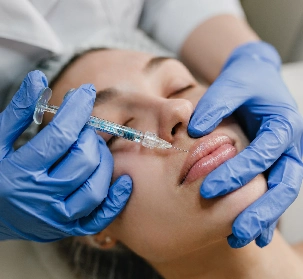
Botox is an injectable prescription medicine containing botulinum toxin type A (onabotulinumtoxinA), a purified protein that temporarily blocks the nerve signals telling a muscle to contract. Injected in small, measured doses into specific facial muscles, it reduces that muscle's pull on the overlying skin, so expression lines soften. The effect is temporary and typically lasts three to six months.
The mechanism is specific: botulinum toxin type A prevents acetylcholine release at the neuromuscular junction. Without acetylcholine, the muscle fibre does not receive its instruction to contract. Nerve terminals regenerate over the following months, muscle activity returns, and lines gradually reappear — which is why Botox is a maintenance treatment rather than a permanent one.
Which Wrinkles Does Botox Work on — and Which Does It Not?
Botox works on dynamic wrinkles — lines created by repeated muscle movement, visible when you frown, smile or raise your eyebrows. It does not treat static wrinkles caused by volume loss, sun damage or reduced skin elasticity, which remain visible when your face is completely at rest. This distinction determines whether Botox is the right treatment for you at all:
| Line type | What causes it | Appropriate treatment |
|---|---|---|
| Dynamic wrinkles | Repeated contraction of facial muscles | Botulinum toxin type A |
| Volume-loss lines and hollows | Loss of fat and bone support with age | Dermal fillers or fat grafting |
| Textural fine lines, laxity | Collagen loss, photoageing | MNRF or laser skin treatment |
| Excess skin, hooding | Structural descent of tissue | Eyelid surgery or facial aesthetic surgery |
A consultation establishes which of these — or which combination — is actually driving your concern.
Is "Botox" the same thing as botulinum toxin?
No. Botulinum toxin type A is the drug; Botox is one brand of it. Other brands available include Dysport (abobotulinumtoxinA), Xeomin (incobotulinumtoxinA) and Botulinum Toxin Type A formulations marketed in India. Units are not interchangeable between brands — 20 units of one product is not equivalent to 20 units of another, because each manufacturer defines its unit by its own potency assay.
Who Is a Good Candidate for Botox?
A good candidate is a healthy adult with visible dynamic wrinkles or a muscle-activity concern such as jaw clenching or excessive sweating, who wants a non-surgical option with minimal downtime and holds realistic expectations. Pregnancy, breastfeeding, neuromuscular disease and active infection at the injection site all rule it out.
You are likely suitable if you:
- Have expression lines that appear or deepen when you frown, squint or raise your eyebrows
- Want to avoid surgery and cannot take time off for recovery
- Understand Botox softens lines rather than erasing them
- Are in good general health with no contraindicating condition
- Are not pregnant or breastfeeding
You are likely not suitable if your lines are present at complete rest with no muscle movement — that is volume or skin-quality ageing, and dermal fillers or anti-ageing treatment would be the honest recommendation.
What is the right age to start Botox?
There is no correct age. The trigger is the appearance of dynamic lines, not a birthday. People with strong frontalis or corrugator activity may develop visible expression lines in their late twenties; others show none until their forties. Facial muscle strength, skin thickness, sun exposure and genetics matter far more than chronological age.
Starting Botox before dynamic lines exist offers no proven benefit and commits you to indefinite maintenance. Starting once lines are etched deeply at rest often disappoints, because Botox cannot fill an established crease — combination treatment is usually needed.
Does preventive or "baby Botox" work?
Preventive Botox — also called baby Botox — uses smaller doses to reduce muscle movement before deep lines form. The logic is reasonable: a line that is never repeatedly folded is slower to become permanent. The evidence base is modest, mostly observational, and it is not right for everyone.
The practical trade-off: you begin a treatment cycle years earlier than necessary, with the cost and commitment that implies, for a benefit that is real but hard to quantify for any individual. The goal of any dose — small or standard — should be preserved, natural expression.
Who should avoid Botox? Contraindications and cautions
Botox should be avoided during pregnancy and breastfeeding, in anyone with a neuromuscular disorder such as myasthenia gravis, Lambert-Eaton syndrome or ALS, in anyone with known hypersensitivity to botulinum toxin products, and where there is active infection at the planned injection site.
Tell your doctor before treatment if you:
| Disclose this | Why it matters |
|---|---|
| Pregnancy or breastfeeding | Safety not established |
| Myasthenia gravis, Lambert-Eaton syndrome, ALS, or any neuromuscular disorder | Risk of exaggerated muscle weakness, including swallowing and breathing muscles |
| Previous allergic reaction to any botulinum toxin product | Risk of hypersensitivity reaction |
| Aminoglycoside antibiotics, muscle relaxants, anticholinergics | May potentiate the toxin’s effect |
| Blood thinners, aspirin, NSAIDs, fish oil, vitamin E | Increase bruising risk |
| Any previous botulinum toxin treatment, including brand and dose | Guides dosing and detects non-response |
| Planned dental work, surgery or vaccination | May affect timing |
Never stop a prescribed medication to prepare for a cosmetic treatment without instruction from the doctor who prescribed it.
Which Areas of the Face Can Botox Treat?
Botox treats dynamic wrinkles and muscle-driven contour concerns across the upper face, mid-face, lower face and neck. In India and most regions, only glabellar lines, lateral canthal lines (crow's feet), forehead lines and platysma bands are approved cosmetic indications — the rest are established off-label uses supported by clinical experience and published literature.
| Area | Muscle targeted | Regulatory status |
|---|---|---|
| Forehead lines | Frontalis | Approved (with glabellar treatment) |
| Frown lines / "11" lines | Corrugator supercilii, procerus | Approved |
| Crow's feet | Orbicularis oculi (lateral fibres) | Approved |
| Neck bands | Platysma | Approved |
| Bunny lines | Nasalis | Off-label |
| Lip flip | Orbicularis oris | Off-label |
| Gummy smile | Levator labii superioris alaeque nasi | Off-label |
| Jawline slimming | Masseter | Off-label |
| Chin dimpling | Mentalis | Off-label |
Forehead Lines
Horizontal forehead lines come from repeated contraction of the frontalis, the only muscle that lifts your eyebrows. Botox relaxes it, softening the lines — but because the frontalis also holds your brow position, over-treatment causes a heavy, dropped brow.
This is the area where injector judgement matters most. The frontalis is treated in conjunction with the frown-line muscles, because relaxing the lifters without addressing the depressors can drag the brow downward. Anatomy varies markedly between individuals in muscle size, position and use — mapping is patient-specific, never a template.
Frown Lines (glabellar lines, "11" lines)
The vertical lines between the eyebrows are produced by the corrugator supercilii and procerus muscles, which pull the brows inward and downward during frowning or concentration. Botox injected into this glabellar complex softens the "11s" and often gives a visibly less stern resting expression.
This is the original and most-studied cosmetic indication for onabotulinumtoxinA. Many patients report that the change in perceived expression — looking less angry or tired at rest — matters more to them than the line reduction itself.
Crow's Feet (lateral canthal lines)
Crow's feet are the fan of fine lines radiating from the outer corners of the eyes when you smile or squint, caused by the lateral fibres of the orbicularis oculi. Botox placed superficially and laterally softens them while preserving a natural smile.
Placement precision matters more here than anywhere else on the face. Injecting too deep or too medially risks affecting muscles that control eyelid position and eye movement. Superficial technique and respect for the orbital rim are essential.
Bunny Lines and the Botox Lip Flip
Bunny lines are the diagonal creases across the sides of the nose that appear when you scrunch or smile, caused by the nasalis muscle. A lip flip uses two to four units of the orbicularis oris to relax the upper lip's inward curl, subtly everting the lip without adding volume.
Both are off-label. A lip flip is a subtle effect and lasts noticeably less time than upper-face treatment — often six to ten weeks. If you want visible lip volume rather than a subtle change in shape, dermal fillers are the appropriate treatment, and this needs to be clear before you proceed.
Gummy Smile
A gummy smile shows excessive gum above the upper teeth when smiling, usually because the lip elevator muscles pull the upper lip too high. Small doses of Botox into the levator labii superioris alaeque nasi reduce that elevation, lowering the lip's resting smile position.
Not every gummy smile is muscular. Some are caused by tooth or jaw proportions, or by the way the gums sit — and in those cases Botox will not help. Assessment must distinguish the cause before treatment is offered.
Jawline Slimming and Masseter Botox
Masseter Botox reduces the bulk and contraction force of the masseter, the main chewing muscle. In people whose lower face looks wide because of masseter hypertrophy — often from long-term clenching or grinding — this can gradually soften the jaw contour over six to twelve weeks. It is an off-label use.
Two points that are often glossed over in marketing:
- The change is gradual, not immediate. Muscle bulk reduces through disuse atrophy over weeks. Expect to judge results at week eight to twelve, not week two.
- A wide lower face is not always muscular. It can be bone structure or buccal fat. Botox will do nothing for either. This is why assessment precedes any promise.
Neck Bands (Platysma Bands)
Vertical cords running down the front of the neck are contractions of the platysma muscle, more visible with age as the muscle loses tone and overlying tissue thins. Platysma band treatment is a labelled indication for BOTOX Cosmetic, dosed at 26, 31 or 36 units depending on how many bands are treated.
The neck contains structures — including the muscles of swallowing — that make depth and placement critical. This is not an area for an inexperienced injector.
Chin Dimpling
Chin dimpling, sometimes described as an “orange peel” appearance, occurs due to increased activity of the mentalis muscle in the chin area.
Botox can help relax this muscle, reducing excessive contraction and improving uneven chin texture in selected patients. Treatment planning depends on the degree of muscle activity and overall facial balance.
How Many Units of Botox Will You Need?
Your dose depends on the area treated, the strength of your muscles, your facial anatomy and your goal. As a reference point, the FDA-approved doses for BOTOX Cosmetic are 20 units for frown lines, 24 units for crow's feet, and 20 units for forehead lines given together with 20 units for frown lines.
Approved unit doses by area
| Treatment area | Labelled dose (BOTOX Cosmetic) | Injection points |
|---|---|---|
| Frown lines (glabellar) | 20 units | 5 sites, 4 units each |
| Crow’s feet (lateral canthal) | 24 units | 6 sites (3 per side), 4 units each |
| Forehead lines | 20 units — given with 20 units glabellar, total 40 units | 5 forehead sites, 4 units each |
| Crow’s feet + frown lines together | 44 units total | 11 sites |
| Forehead + frown + crow’s feet | 64 units total | 16 sites |
| Platysma bands | 26, 31 or 36 units | 18, 23 or 28 sites |
| Underarm sweating | 100 units (50 per underarm) | 10–15 sites per underarm |
| Chronic migraine | 155 units | 31 fixed sites, every 12 weeks |
What Determines Your Dosage
Dose is set at consultation after assessing muscle strength on animation, facial symmetry, skin thickness, sex, prior treatment response and how much movement you want to retain. Men generally require higher doses than women because of greater facial muscle mass. Someone treated repeatedly for years may need less than at their first session, as chronically relaxed muscles reduce in bulk.
Under-dosing produces disappointing, short-lived results. Over-dosing produces the frozen appearance and brow heaviness that most patients specifically want to avoid. Getting this right is the skill you are paying for.
Why Choose Dr Anirban Ghosh?
About the Surgeon
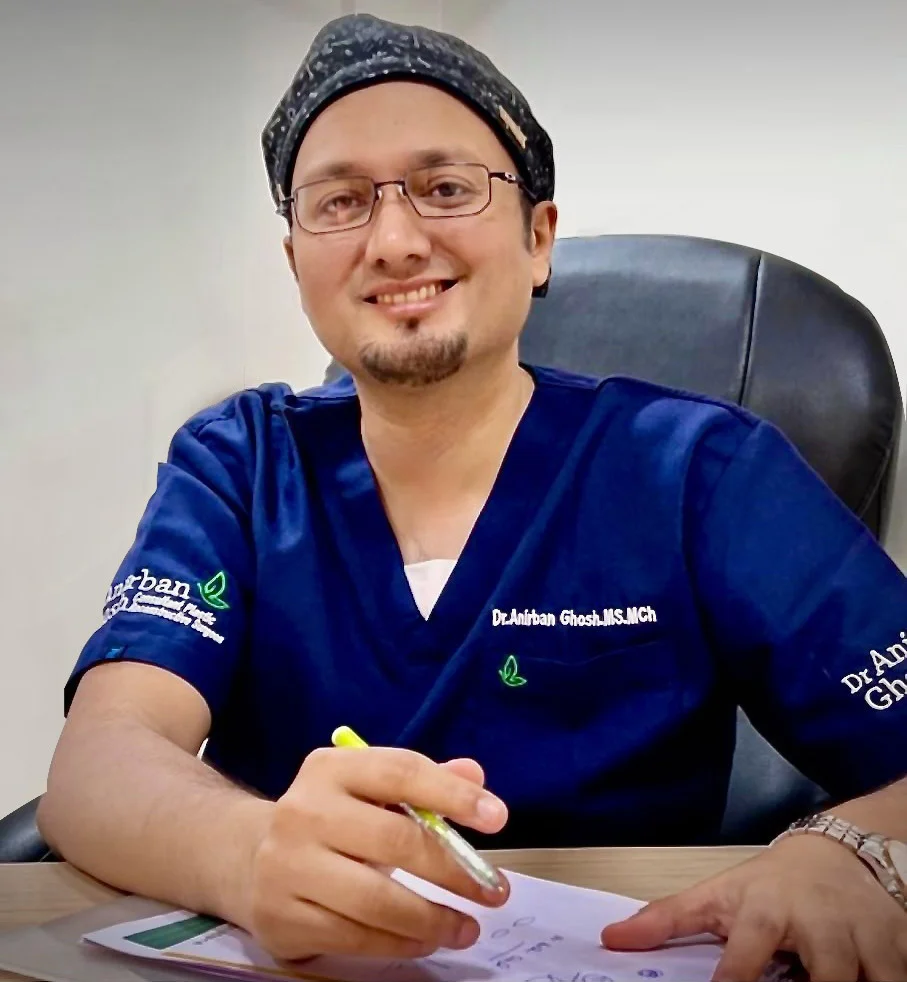
Dr. Anirban Ghosh
- MBBS (Gold Medallist)
- MS (General Surgery)
- MRCS (England)
- MCh (Aesthetic Plastic Surgery)
15+ Years of Experience
in aesthetic & reconstructive plastic surgery
50000+ Patients
Affiliations
- Indian Association of Aesthetic Plastic Surgeons (IAAPS)
- The Association of Plastic Surgeons of India (APSI)
Awards & Recognitions
- Honoured with the Indian Icon Best Healthcare Entrepreneur Award
- Esteemed Recipient of the Rabindra Ratna Puraskar 2025
What Happens During a Botox Procedure?
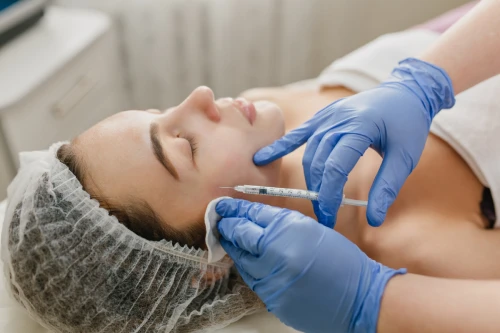
A Botox appointment takes about 15 to 30 minutes. It involves a consultation and facial assessment, mapping of injection points, optional topical numbing, the injections themselves using a very fine needle, and post-treatment instructions. There is no anaesthesia, no incision and no recovery period.
Consultation and Facial Assessment
The doctor watches your face move — frowning, raising the brows, smiling, squinting — because static photographs cannot show which muscles are driving your lines. Medical history, medications, previous injectable treatments and your specific goals are reviewed to confirm Botox is appropriate.
Mapping the Injection Points
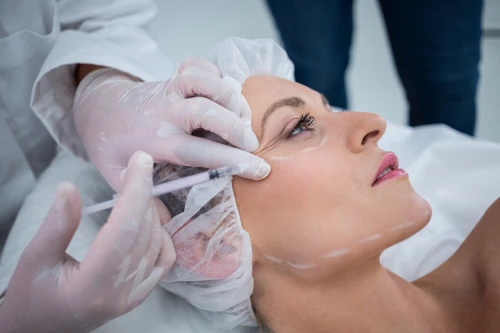
Injection sites are marked according to your individual anatomy, not a standard diagram. Muscle position, size and strength vary considerably between people; mapping accounts for asymmetry, brow position and how much movement you want preserved.
Topical Numbing (Optional)
Botox is delivered through a very fine needle, and most patients describe the sensation as a brief sting. Topical anaesthetic cream or ice may be offered for sensitive areas or anxious patients, but the majority of upper-face treatments proceed comfortably without it.
The Injections
Measured doses are placed into the mapped muscles. The whole injection sequence usually takes five to ten minutes. Nothing visible happens immediately — the muscle relaxation develops over the following days.
Aftercare instructions
You receive area-specific instructions before leaving, covering activity, positioning and what warrants a call back to the clinic. A review appointment at two weeks is often arranged to assess the result and address any asymmetry.
How Should You Prepare Before a Botox Appointment?
Preparation is mainly about reducing bruising risk. Avoid alcohol and strenuous exercise for 24 hours beforehand, and tell your doctor about every medication and supplement you take — particularly blood thinners, aspirin, NSAIDs, fish oil and vitamin E.
Medications and Supplements to Pause
Medications and supplements to discuss
| Substance | Effect | Action |
|---|---|---|
| Aspirin, NSAIDs, ibuprofen | Increased bruising | Discuss timing with your doctor |
| Prescribed anticoagulants | Increased bruising | Never stop without your prescribing doctor's approval |
| Fish oil, vitamin E, ginkgo, ginseng, garlic supplements | Increased bruising | Usually paused ~1 week before, if your doctor agrees |
| Aminoglycoside antibiotics, muscle relaxants | May amplify toxin effect | Disclose; treatment may be deferred |
The rule that overrides everything else: prescribed medication is never stopped for a cosmetic procedure without the approval of the doctor who prescribed it. If a blood thinner cannot safely be paused, the treatment is planned around it or postponed.
What to avoid in the 24 hours before
Alcohol — dilates blood vessels and increases bruising
Intense exercise
Booking treatment within two weeks of an important event, so any bruising has time to settle, and the result has time to develop

What is the Botox recovery timeline?
Botox involves essentially no downtime — most people return to work immediately. Effects begin at day three to five, reach full effect at day ten to fourteen, and last three to six months.
| Timeframe | What happens | What to do |
|---|---|---|
| First 4 hours | Small raised bumps at injection sites settle | Stay upright. Do not rub, massage or apply pressure to treated areas |
| 24–48 hours | Possible redness, mild swelling or small bruises | Avoid strenuous exercise, saunas, steam, facials and face-down positions |
| Days 3–5 | Muscle relaxation becomes noticeable; lines begin softening | Resume all normal activity |
| Days 10–14 | Full effect visible; this is the point at which results are judged | Attend review; any asymmetry can be corrected with a small top-up |
| Months 3–6 | Movement gradually returns; lines reappear | Rebook when movement returns, before lines re-etch |
Do not judge your result before day fourteen. Assessing at day five, seeing partial effect and concluding the treatment failed is the single most common source of unnecessary worry.
How Long Does Botox Last?
Botox typically lasts three to six months. Frown-line treatment averages three to four months; masseter treatment often lasts longer at four to six months; a lip flip may last only six to ten weeks because the muscle is small and constantly used.
What makes results wear off faster?
- High muscle activity — very expressive faces and strong muscles recover movement sooner
- Fast metabolism and high-intensity exercise — frequent endurance training is associated with shorter duration
- Low dose — under-dosing to reduce cost reliably produces a shorter result
- Small, constantly used muscles — perioral areas wear off soonest
- Antibody formation — rare, but repeated high-dose treatment at short intervals can produce neutralising antibodies and progressive non-response, which is why intervals shorter than three months are generally discouraged
Do Results Last Longer with Repeat Treatment?
Often, yes. Muscles kept relaxed over several treatment cycles reduce in bulk and strength, so subsequent treatments may last longer or require fewer units. This is most noticeable with masseter treatment. It is not permanent — stop treatment and muscle strength gradually returns.
What are the risks and side effects of Botox?
Common side effects are mild and temporary: redness, small bumps, tenderness, bruising and headache lasting a day or two. Less common effects include eyelid or brow drooping, asymmetry and dry eyes, which are temporary but can persist for several weeks. Serious complications from distant spread of toxin are rare but carry a boxed warning.
Common and Temporary Side Effects
| Effect | Typical duration |
|---|---|
| Redness at injection sites | Under an hour |
| Small raised bumps | 15–30 minutes |
| Bruising | 3–7 days |
| Tenderness | 1–2 days |
| Mild headache | 24–48 hours |
Rare Complications and How They're Managed
Eyelid drooping (ptosis) and brow heaviness are the complications patients fear most. Both are caused by product diffusing into a muscle it was not intended to reach, and both resolve on their own as the effect wears off — typically within two to six weeks. Prescription eye drops can partially offset eyelid ptosis in the interim.
Also possible: facial asymmetry, an unnatural brow arch from uneven frontalis relaxation, dry eyes or excessive watering, and — with lower-face treatment — temporary changes to smile or chewing. Injector experience and anatomical knowledge are the main defence against all of these.
The boxed warning: distant spread of toxin effect
Botulinum toxin products carry a boxed warning that the toxin's effect may, rarely, spread beyond the injection site, producing symptoms of botulism. Reported symptoms include generalised muscle weakness, drooping eyelids, double vision, difficulty swallowing, changes in speech and breathing difficulty.
These reports have overwhelmingly involved high therapeutic doses in children treated for spasticity, and no definitive serious adverse events from distant spread have been reported at the labelled cosmetic doses (20 units for glabellar lines, 24 for lateral canthal lines, 40 for forehead with glabellar lines, 64 for all three areas, or 100 units for severe underarm sweating).
Seek medical attention immediately if you develop swallowing difficulty, breathing difficulty, slurred speech, double vision or generalised weakness after treatment, at any point from hours to weeks afterwards.
Can Botox Be Reversed?
No. Unlike hyaluronic acid fillers, which can be dissolved with hyaluronidase, no agent reverses botulinum toxin. If a result is unsatisfactory, management is supportive — eye drops for ptosis, occasionally a small balancing dose in an opposing muscle to improve symmetry — while waiting for the effect to wear off naturally over weeks to months. The temporary nature of Botox is, in this specific sense, a safety feature.
Botox vs dermal fillers vs skin treatments — which do you need?
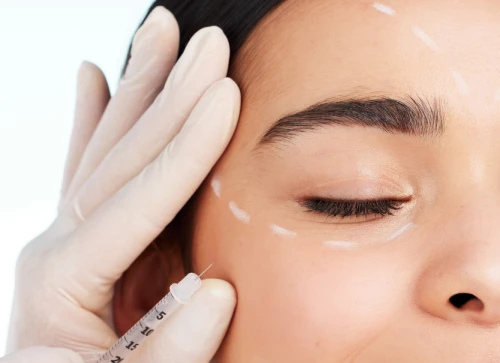
Botox relaxes muscles to soften movement lines. Dermal fillers add volume to restore lost fullness and contour. MNRF and laser treatments rebuild collagen to improve skin texture and firmness. They address three different mechanisms of ageing and are frequently combined.
Botox vs. Dermal Fillers
| Botox | Dermal fillers | |
|---|---|---|
| Mechanism | Blocks nerve signals; relaxes muscle | Adds physical volume beneath the skin |
| Treats | Dynamic movement lines | Volume loss, contour, static creases |
| Typical areas | Forehead, frown lines, crow's feet, jawline, neck | Cheeks, lips, tear troughs, nasolabial folds, chin |
| Adds volume? | No | Yes |
| Results appear | Days 3–5; full at 10–14 days | Immediately, refining over 2 weeks |
| Duration | 3–6 months | 6–18 months by product and area |
| Reversible? | No | Yes, if hyaluronic acid based |
| Best for | Expressive faces with movement lines | Faces that have lost volume and definition |
Botox vs. MNRF and Skin Tightening
Botox does nothing for skin quality. If your concern is texture, pore size, laxity or crepey fine lines rather than expression lines, MNRF — which delivers radiofrequency energy into the dermis via microneedles to stimulate collagen — addresses the actual problem. Laser skin treatment and PRP work on pigmentation and skin regeneration, respectively.
When a Combination Works Best
Facial ageing rarely has one cause, so single-modality treatment often produces partial results. A typical combination plan might use Botox for the upper-face expression lines, filler to restore mid-face volume, and MNRF or laser for skin texture — sequenced over several appointments rather than performed at once. A face rejuvenation assessment identifies which components you actually need.
Where changes are structural — significant skin excess, descent of tissue — injectables cannot substitute for facial aesthetic surgery, and being told so plainly is more useful than being sold a series of treatments that cannot deliver.
Visiting Our Clinic in Kolkata
Anirvana Clinic
8/29 Fern Road, Ballygunge Gardens, Gariahat Kolkata, West Bengal 700019
Phone
6289109687
Consultation hours
| Day | Hours |
|---|---|
| Monday | 10:00 am – 10:30 pm |
| Tuesday – Saturday | 9:00 am – 9:30 pm |
| Sunday | Closed |
Hours may vary on public holidays.
Areas served
Patients travel to the Ballygunge clinic from Gariahat, Ballygunge, Dhakuria, Rashbehari, Kasba, Jadavpur, Tollygunge, Alipore, Park Street, Salt Lake, New Town, Behala, Howrah and across South and North Kolkata — as well as from Durgapur, Asansol, Siliguri and other districts of West Bengal, and from Bihar, Jharkhand, Odisha and Assam.
Travelling from outside Kolkata? Discuss the follow-up schedule before booking travel.
Frequently Asked Questions (FAQs)
Does Botox hurt?
Most patients describe brief stinging lasting a couple of seconds per injection, comparable to a pinprick. The needle used is very fine. Topical numbing cream or ice can be applied for sensitive areas or anxious patients, though most upper-face treatments proceed comfortably without any anaesthetic.
How soon will I see Botox results?
Botox results begin appearing at day three to five and reach full effect at day ten to fourteen. Nothing is visible immediately after injection. Judge your result at the two-week mark, not before — assessing too early is the most common cause of unnecessary concern.
How many units of Botox do I need for my forehead?
The FDA-approved dose is 20 units for forehead lines, given together with 20 units for frown lines — 40 units total — because relaxing the brow lifters without treating the depressors can drop the brow. Your actual dose is set after assessing your muscle strength at consultation.
Can Botox prevent wrinkles from getting deeper?
Botox reduces the repeated muscle folding that turns dynamic lines into permanent creases, so it can slow their progression. The evidence is largely observational rather than from large controlled trials. Whether early treatment makes sense for you depends on your muscle activity and skin, not your age.
What's the difference between Botox and fillers?
Botox relaxes muscles to soften lines caused by movement. Fillers add volume to restore fullness lost with age. If your lines appear when you make expressions, you need Botox. If they are visible with your face completely still, you likely need fillers.
Can men have Botox?
Yes. Men typically need higher doses than women because facial muscles are larger and stronger, and treatment is usually planned to preserve a flatter brow rather than create arch. Common areas are frown lines, forehead and masseter for jaw clenching.
Can Botox treat acne scars or tighten skin?
No. Botox only affects muscle activity and has no effect on scars, skin texture, pigmentation or laxity. Acne scarring is treated with MNRF or laser resurfacing; skin laxity may need energy-based tightening or surgery.
How often should Botox be repeated?
Most patients repeat every three to six months, timed to when muscle movement returns rather than to a fixed calendar. Intervals shorter than three months are generally discouraged, because frequent high-dose exposure raises the small risk of developing antibodies that reduce future response.
Can I exercise after Botox?
Avoid strenuous exercise, saunas and steam for 24 hours. Raised blood flow and repeated facial flushing in the first day may increase bruising and, in theory, product movement. Light walking and normal daily activity are fine immediately.
Does Botox remove wrinkles permanently?
No. Botox is temporary. Nerve terminals regenerate over three to six months, muscle activity returns and lines gradually reappear. Long-term repeat treatment may reduce muscle bulk so results last longer, but stopping treatment allows normal movement and lines to return.
Can Botox look natural?
Yes — a natural result is the aim, not a compromise. The frozen look comes from over-dosing or poor placement, not from Botox itself. Correctly dosed treatment softens lines while leaving you able to raise your eyebrows, smile and show expression normally.
Is Botox only cosmetic?
No. Botulinum toxin type A is an established treatment for chronic migraine prevention, severe underarm sweating, cervical dystonia and muscle spasticity. Several of these have been approved medical indications for longer than the cosmetic uses.
How long does a Botox appointment take?
A first appointment takes 30 to 45 minutes including consultation and assessment. The injections themselves take five to ten minutes. Follow-up sessions are shorter. A review at two weeks is usually arranged to assess the result.
What happens if Botox is injected incorrectly?
Poor placement or dosing can cause drooping eyelids, heavy or unevenly arched brows, facial asymmetry, or an affected smile. These are temporary and resolve as the effect wears off over weeks, but there is no antidote — which is why injector qualification matters more than price.
Is there downtime after Botox?
Effectively none. Most patients return to work immediately. Small bumps at injection sites settle within half an hour, and any redness fades within the hour. Bruising, if it occurs, lasts a few days and is coverable with makeup after 24 hours.
Can Botox be combined with fillers or other treatments?
Yes, and combination is common because Botox, fillers and skin treatments address different ageing mechanisms. Sequencing matters — treatments are usually staged rather than done together. A face rejuvenation assessment establishes the right order.
Is Botox safe long-term?
Botulinum toxin type A has been in clinical use since the 1980s with a well-characterised safety record at cosmetic doses. Long-term risks are mainly reduced response from antibody formation with frequent high dosing, and — with repeated masseter treatment — possible bone density changes at the jaw angle.
Can I have Botox while pregnant or breastfeeding?
No. Safety during pregnancy and breastfeeding has not been established, and Botox is avoided in both. Tell your doctor if you are pregnant, may be pregnant, or are breastfeeding. Elective cosmetic treatment can be deferred until after you have finished breastfeeding.
Request An Appointment
Visit us
Anirvana Clinic
Ballygunge, Kolkata — just off Rash Behari Avenue
References and Medical Sources
- US Food and Drug Administration — BOTOX Cosmetic (onabotulinumtoxinA) Prescribing Information, current label revision. https://www.accessdata.fda.gov/drugsatfda_docs/label/
- US Food and Drug Administration — BOTOX (onabotulinumtoxinA) Prescribing Information, therapeutic indications.
- American Society of Plastic Surgeons — Botulinum Toxin Treatment. https://www.plasticsurgery.org/cosmetic-procedures/botulinum-toxin
- Sundaram H, et al. Global Aesthetics Consensus: Botulinum Toxin Type A — Evidence-Based Review, Recommendations, and Real-World Applications. https://pmc.ncbi.nlm.nih.gov/articles/PMC5242214/
- Witmanowski H, Błochowiak K. The whole truth about botulinum toxin — a review. Clin Cosmet Investig Dermatol. 2020. https://pmc.ncbi.nlm.nih.gov/articles/PMC7874868/
- Nigam PK, Nigam A. Botulinum toxin. Indian J Dermatol. 2010. https://www.ncbi.nlm.nih.gov/pmc/articles/PMC2856357/