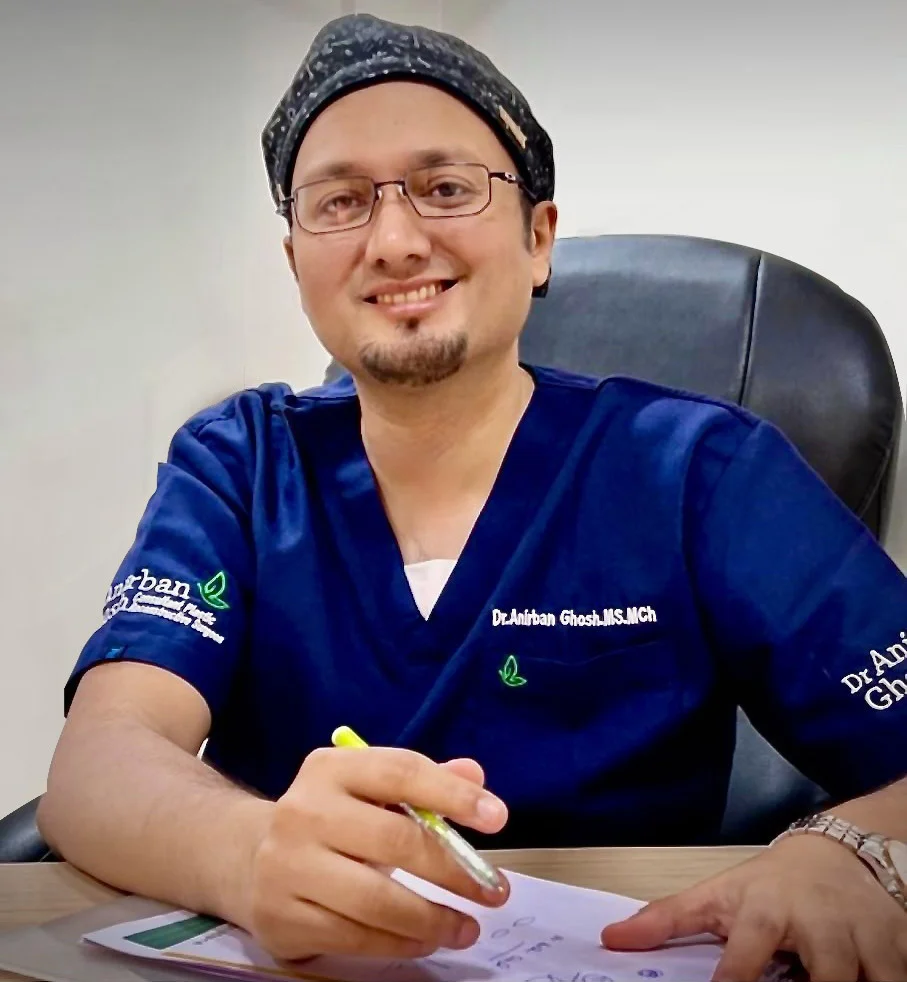
Gynecomastia Surgeon in Kolkata
Dr Anirban Ghosh — MCh Plastic Surgery | 15+ years | Anirvana Clinic, Ballygunge
Home / Surgical / Gynecomastia
What Is Gynecomastia?
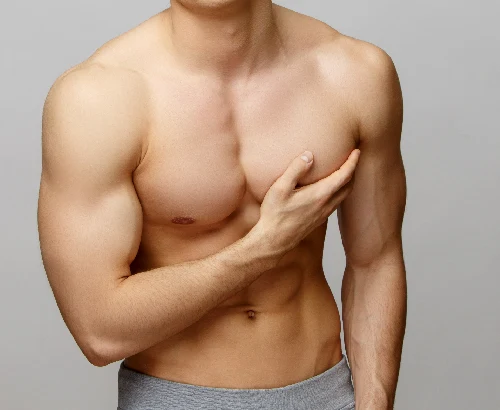
Gynecomastia is the growth of real glandular breast tissue in men, caused by an imbalance between oestrogen and testosterone activity. It is not simply chest fat, which is why exercise and weight loss do not remove it. Once the tissue has been present for more than about a year, it becomes fibrous, and surgery — usually liposuction combined with glandular excision — becomes the only reliable treatment.

Glandular Tissue vs. Fat: Why the Difference Matters
| Glandular tissue (true gynecomastia) | Fat (pseudogynecomastia) | |
|---|---|---|
| Feel | Firm, rubbery, disc-like, centred under the nipple | Soft, diffuse, spread across the chest |
| Location | Concentric around the areola | No defined edge |
| Symptoms | Can be tender or painful | Usually painless |
| Responds to weight loss | No | Often yes |
| Treatment | Surgical excision | Liposuction or weight loss |
Most men have a mix of both, which is why combined liposuction and excision is the commonest operation. Removing fat alone leaves a hard lump behind the nipple; removing gland alone leaves a bulky chest.
How Common Is It?
Gynecomastia is one of the most common male chest conditions and appears in three natural peaks: newborns, adolescents (affecting roughly half of teenage boys, usually resolving within one to two years) and men over 50, where declining testosterone and rising body fat shift the hormonal balance. Persistence beyond two years usually means the tissue has become fibrotic and will not resolve on its own.
What Causes Gynecomastia?
| Cause | How it works | Reversible? |
|---|---|---|
| Puberty | Temporary oestrogen–testosterone imbalance | Usually resolves in 6–24 months |
| Ageing | Falling testosterone; body fat converts testosterone to oestrogen | Rarely resolves alone |
| Anabolic steroids, SARMs, prohormones | Excess testosterone is converted to oestradiol | Only if stopped early; a very common cause in gym-going men |
| Medications | Spironolactone, cimetidine, finasteride/dutasteride, ketoconazole, calcium channel blockers, some antipsychotics, antiretrovirals, anti-androgens for prostate cancer | Often, if stopped within months — never stop a prescribed drug without your doctor |
| Alcohol and recreational drugs | Liver effects; cannabis, opioids, amphetamines | Variable |
| Medical conditions | Liver cirrhosis, chronic kidney disease, thyroid disorders, low testosterone, testicular or adrenal tumours | Depends on the condition |
| Klinefelter syndrome (47,XXY) and other genetic causes | Chromosomal; also carries a significantly raised male breast cancer risk | Needs endocrine and genetic input |
| No cause found (idiopathic) | Around a quarter of cases | — |
Anabolic steroids deserve a direct warning: operating on a man who is still using will almost certainly result in recurrence. You must stop well before surgery and stay off afterwards.
When a Chest Lump Needs Urgent Evaluation
Male breast cancer accounts for roughly 1% of all breast cancers — rare, but real. See a doctor promptly, before considering cosmetic surgery, if you notice:
- A hard, fixed lump that is off-centre rather than concentric under the nipple
- Changes on one side only, especially if growing quickly
- Nipple retraction, skin dimpling, puckering or ulceration
- Blood-stained or clear nipple discharge
- A lump in the armpit
- Family history of breast cancer, a known BRCA2 mutation, or Klinefelter syndrome
Every case should be clinically examined — including a testicular examination — before any surgical plan is made. Gynecomastia surgery on an unexamined lump risks delaying a cancer diagnosis.
Diagnosis and Investigations
Clinical Examination
Assessing the size, consistency and position of the tissue, skin excess, symmetry and any red flags, plus testicular examination.
Hormone Profile and Blood Tests
Not needed for every patient. Typically ordered for rapid onset, pain, unusually large or one-sided swelling, or younger patients: testosterone, LH, FSH, oestradiol, prolactin, hCG, thyroid function, liver and kidney function.
Ultrasound and Mammography of the Male Breast
Ultrasound is the first-line scan for a male breast; mammography is added if anything is suspicious. Imaging reliably distinguishes gynecomastia from cancer in most cases.
When Further Specialist Referral Is Needed
Onward referral to endocrinology for hormonal abnormalities, urology for a testicular mass, breast oncology for suspicious imaging, or genetics for suspected Klinefelter syndrome.
Grades of Gynecomastia and What Each One Means
| Grade | What it looks like | Usual surgical approach |
|---|---|---|
| 1 | Small, localised puffiness around the nipple; no skin excess | Excision, sometimes with limited liposuction |
| 2 | Moderate enlargement across the chest; no significant skin excess | Combined liposuction + glandular excision |
| 3 | Moderate–marked enlargement with mild skin excess and early droop | Combined surgery ± limited skin tightening |
| 4 | Marked enlargement with significant skin excess and a female-appearing droop | Excision with formal skin excision; free nipple graft in extreme cases |
Based on the Simon and Rohrich classifications. Your grade, tissue composition and skin elasticity together determine the technique — grade alone does not.
Non-Surgical Management: When It Works
There is a genuine but narrow window — roughly the first 12 months. During this early phase, the tissue is soft and actively proliferating and may still regress. After that it becomes fibrotic and scarred, and no medication or exercise will remove it.
Stopping the Causative Medication or Steroid
Withdrawing an anabolic steroid or a causative medication (under medical supervision) resolves a meaningful proportion of early cases.
Treating the Underlying Condition
Thyroid disease, low testosterone, liver or kidney disease.
Medical Therapy and Its Narrow Window
Tamoxifen and similar drugs are used off-label, are most effective within the first year, and require specialist supervision and monitoring. They are not a substitute for surgery in established, firm gynecomastia.
Why Diet and Exercise Alone Don't Remove Glandular Tissue
Chest training can actually make a residual disc more obvious by pushing it forward. This is the single most common source of frustration in men who have "tried everything".
When Surgery Becomes the Only Option
Surgery becomes the option when the tissue is firm and long-standing, when it persists after the cause is removed, or when it is causing pain or significant distress.
Are You a Candidate for Gynecomastia Surgery?
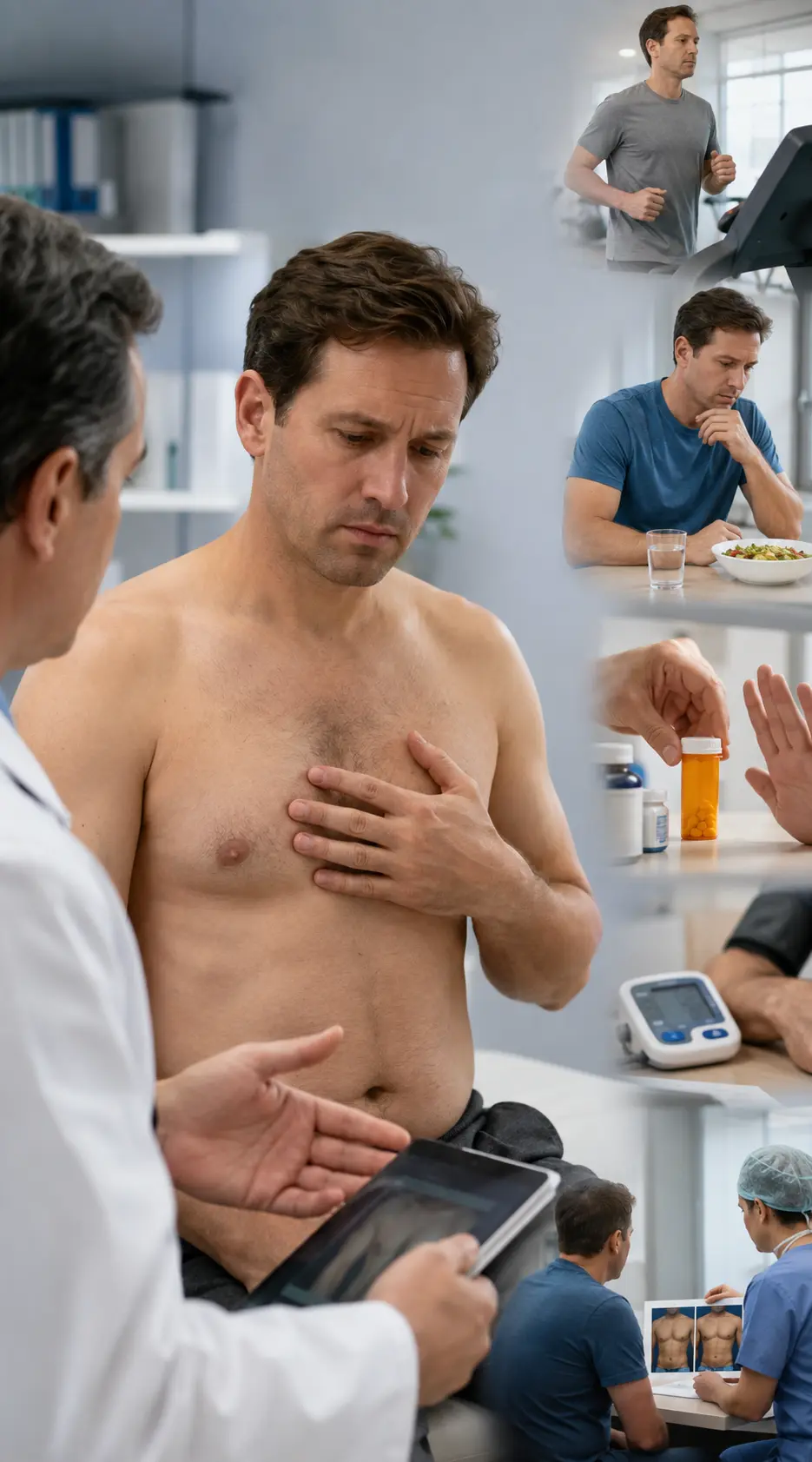
Good candidates: stable weight for 3–6 months · off anabolic steroids · non-smoker or willing to stop · underlying cause investigated and addressed · realistic expectations · generally fit for anaesthesia.
- Adolescents — most pubertal gynecomastia resolves on its own. Operating during active hormonal change risks recurrence, so surgery is usually deferred until puberty is complete and the chest has been stable for at least a year. Severe, persistent, high-grade cases with real psychological impact are considered individually.
- Ongoing steroid or SARM use — recurrence is near-certain.
- Planned significant weight loss — lose the weight first; the result will be better and more stable.
- Uninvestigated lump, untreated underlying condition, uncontrolled diabetes, bleeding disorder, active infection, or active smoking.
Types of Gynecomastia Surgery
| Technique | Best for | Notes |
|---|---|---|
Liposuction alone |
Fatty-predominant chest / pseudogynecomastia | 3–5 mm access incisions; will not remove glandular tissue |
Glandular excision (Webster / periareolar) |
Firm disc under the nipple | Incision along the lower areolar border; a thin disc of tissue is deliberately left behind the nipple |
Combined liposuction + excision |
Most true gynecomastia | The standard approach; liposuction contours and feathers the edges, excision removes the gland |
VASER / ultrasound-assisted liposuction |
Fibrous or dense chests | May improve skin retraction; usually still needs gland excision — it is an adjunct, not a replacement |
Skin excision |
Grades 3–4, post-weight-loss chests | Adds longer scars in exchange for shape; pattern depends on skin excess |
Free nipple grafting |
Massive gynecomastia, major weight loss | Nipple removed and replaced as a graft; permanent loss of sensation and possible colour change |
Revision surgery |
Crater deformity, residual gland, asymmetry | Often uses fat grafting to correct over-resection |
The most important technical point: the surgeon must leave a small cushion of tissue directly beneath the nipple. Removing everything creates a crater deformity — a visible dip that is harder to fix than the original problem.
Scars: Where They Are and How They Heal
| Technique | Scar |
|---|---|
| Liposuction | 3–5 mm marks in the fold or armpit; usually near-invisible |
| Periareolar excision | Along the lower edge of the areola, hidden at the colour change |
| Skin excision | Around the areola, sometimes with a vertical or horizontal extension |
- Timeline: red and raised for 4–8 weeks, fading over 6–12 months, final at 12–18 months.
- Keloid and hypertrophic scarring risk is higher in Indian and darker skin tones, and the chest is a high-risk site. Tell your surgeon about any previous keloids or family history — it changes technique and aftercare.
- Scar protocol: silicone gel or sheeting from around 2–3 weeks · taping or compression · strict sun protection · early steroid injection for thickened scars · review at 6 weeks, 3 months and 6 months.
Why Choose Dr Anirban Ghosh?
About the Surgeon
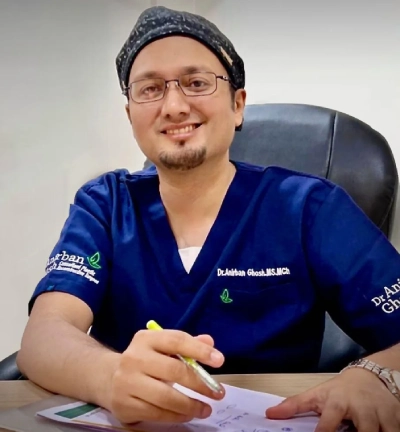
Dr. Anirban Ghosh
- MBBS (Gold Medallist)
- MS (General Surgery)
- MRCS (England)
- MCh (Aesthetic Plastic Surgery)
15+ Years of Experience
in aesthetic & reconstructive plastic surgery
50000+ Patients
Affiliations
- Indian Association of Aesthetic Plastic Surgeons (IAAPS)
- The Association of Plastic Surgeons of India (APSI)
Awards & Recognitions
- Honoured with the Indian Icon Best Healthcare Entrepreneur Award
- Esteemed Recipient of the Rabindra Ratna Puraskar 2025
Your Consultation: What to Expect
This is a confidential, judgement-free assessment. Many men delay treatment for years out of embarrassment; the consultation is a routine clinical appointment.
- Examination, chest measurements and standardised clinical photographs (stored securely, used only with your written consent)
- Full review of medications, supplements, steroid or SARM use, alcohol and recreational drugs — be completely honest here; it directly affects your result
- Blood tests, imaging and a pre-anaesthetic review as indicated
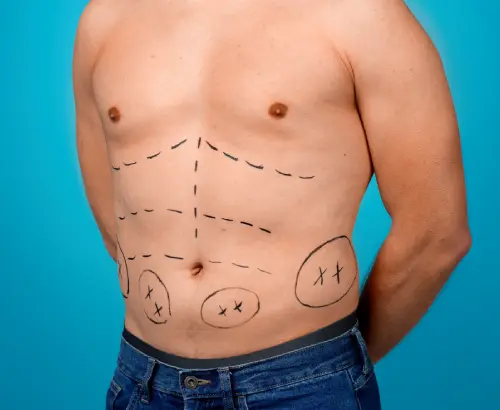
- Discussion of technique, scar position, expected recovery and realistic outcome
Questions worth asking:
- How many of these do you perform each year?
- Will I need excision as well as liposuction?
- Where exactly will my scars be?
- What is your revision rate?
- What is the total cost including revision?
- What happens if I get a crater or asymmetry?
How to Prepare for Surgery
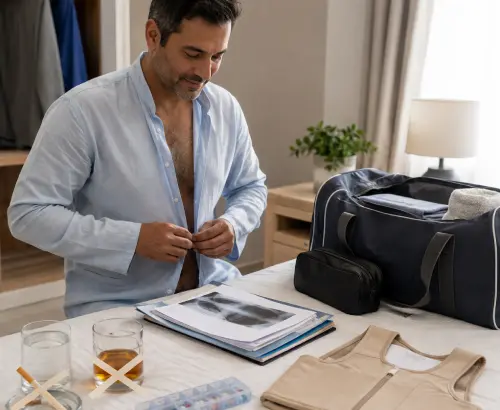
- Stop smoking and nicotine at least 4 weeks before and after — it impairs wound healing and raises nipple complication risk.
- Stop anabolic steroids and SARMs well in advance, as advised.
- Pause blood thinners, aspirin, NSAIDs and supplements such as fish oil, vitamin E and ginkgo on your surgeon's schedule. Never stop prescribed medication independently.
- Avoid alcohol for a week before and after.
- Time off: plan 5–7 days; longer for physical work.
- On the day: fast as instructed, wear a loose front-opening shirt, bring your compression vest, medication list and reports, and arrange someone to take you home.
The Procedure Step by Step
Marking
done standing, mapping the gland, the chest fold and the feathering zones.
Anaesthesia
general anaesthesia, or local with sedation for smaller cases.
Liposuction
removes the fatty component, defines the chest border and loosens the gland.
Excision
the glandular disc is removed through the periareolar incision, leaving a protective cushion beneath the nipple.
Contouring
edges are feathered into the surrounding chest so there is no visible step-off.
Closure and compression
fine sutures, occasionally a drain, then a compression vest applied on the table.
Duration
typically 1–2 hours.
Discharge
most patients go home the same day.
Recovery After Gynecomastia Surgery
| Period | What to expect |
|---|---|
| First 48 hours | Soreness, swelling, bruising, tightness. Compression vest on continuously. Rest, prescribed painkillers, no lifting. |
| Week 1 | Walking encouraged. Desk work often possible from day 3–7. Dressings reviewed. |
| Weeks 2–4 | Back to work and driving. Swelling settling. Bruising resolving. |
| Weeks 4–6 | Compression continues (typically 4–6 weeks). Light cardio resumes. |
| Weeks 6–8 | Gradual return to gym; chest and upper-body training last. |
| Months 3–6 | Swelling fully resolves, skin retracts, final contour appears. Scars still maturing. |
Do: wear the vest exactly as instructed · sleep slightly elevated early on · stay hydrated and eat well · attend every follow-up.
Don't: lift heavy weights early · resume steroids · sunbathe the scars · massage the area unless told to · panic about firmness at 4–6 weeks, which is normal healing.
Risks and Complications
| Complication | Notes |
|---|---|
| Expected effects | Swelling, bruising, numbness, tenderness, temporary firmness — all normal |
| Haematoma | The most common significant complication; may need drainage in theatre |
| Seroma | Fluid collection; usually managed by aspiration |
| Infection | Uncommon; treated with antibiotics |
| Crater/saucer deformity | From over-resection under the nipple; corrected by fat grafting |
| Persistent puffiness | Incomplete gland removal; needs revision |
| Nipple sensation change | Usually temporary; permanent numbness possible. Nipple necrosis is rare but serious, more likely with extensive undermining, smoking or free grafting |
| Asymmetry/contour irregularity | Minor differences are common; noticeable ones may need revision |
| Recurrence | Almost always from resumed steroid use, significant weight gain, a new medication, or an untreated underlying cause |
Contact the clinic urgently for rapid one-sided swelling, fever, spreading redness, heavy bleeding, wound discharge, or a nipple that turns dark or dusky.
Are the Results Permanent?
Yes, in the sense that excised glandular tissue does not grow back. Breast gland cells removed at surgery are gone permanently.
What can change the result: resuming anabolic steroids (the leading cause of recurrence), significant weight gain adding fat back to the chest, starting a new causative medication, or an untreated underlying condition stimulating any residual tissue. Staying off steroids and maintaining a stable weight protects the result long-term.
Choosing a Gynecomastia Surgeon in Kolkata
MCh (Plastic Surgery) qualification matters. It is the recognised superspecialty training for this surgery. Verify registration on the NMC or State Medical Council register — it is publicly searchable.
Ask: How many gynecomastia cases a year? Do you do excision as well as liposuction? Where will my scars be? What is your revision rate, and is revision charged extra? Who administers the anaesthesia? Can I see results for a chest like mine?
Red flags: a fixed price quoted without examination · "liposuction only" promised for a firm gland · no examination of the lump before booking · pressure to decide immediately · guaranteed results · unqualified operators in non-accredited premises.
Privacy: consultations, photographs and records are confidential. Photographs are never published without separate, specific, written consent.
Visiting Our Clinic in Kolkata
Anirvana Clinic
8/29 Fern Road, Ballygunge Gardens, Gariahat Kolkata, West Bengal 700019
Phone
+91 6289109687
Consultation hours
| Day | Hours |
|---|---|
| Monday | 10:00 am – 10:30 pm |
| Tuesday – Saturday | 9:00 am – 9:30 pm |
| Sunday | Closed |
Hours may vary on public holidays.
Areas served
Patients travel to the Ballygunge clinic from Gariahat, Ballygunge, Dhakuria, Rashbehari, Kasba, Jadavpur, Tollygunge, Alipore, Park Street, Salt Lake, New Town, Behala, Howrah and across South and North Kolkata — as well as from Durgapur, Asansol, Siliguri and other districts of West Bengal, and from Bihar, Jharkhand, Odisha and Assam.
Travelling from outside Kolkata? Discuss the follow-up schedule before booking travel.
Frequently Asked Questions (FAQs)
Can gynecomastia go away without surgery?
Yes, if it is early. Pubertal cases usually resolve within one to two years, and stopping a causative drug or steroid can reverse recent cases. Once the tissue has been firm for over a year, it is fibrotic and will not resolve.
Will exercise or losing weight get rid of it?
Weight loss reduces chest fat but cannot remove glandular tissue. Chest training can make a residual disc more noticeable by pushing it forward.
How do you know if it's gland or just fat?
Glandular tissue feels like a firm, rubbery disc directly under the nipple and may be tender. Fat is soft and spread out. A clinical examination, with ultrasound if needed, gives the definite answer.
Is gynecomastia surgery painful?
There is soreness and tightness for the first few days, generally well controlled with oral painkillers. Most men describe it as less painful than expected.
How long until you can go back to the gym?
Light cardio at around 2–3 weeks; chest and upper-body training at 6–8 weeks, introduced gradually.
Will it come back?
Excised gland does not regrow. Recurrence usually means resumed steroid use, significant weight gain or an untreated cause.
How visible will the scar be?
The main scar sits along the lower edge of the areola where the colour changes, and usually fades well. Higher grades needing skin excision have longer scars.
Can I have surgery while still using steroids?
No. Operating during ongoing use makes recurrence highly likely. You must stop well before surgery and stay off.
I'm 17 — can I have surgery now?
Usually the advice is to wait until puberty is complete and the chest has been stable for at least a year. Severe persistent cases are assessed individually.
Is it covered by insurance?
Usually not, as it is generally classed as cosmetic. Exceptions may apply with documented pain or an underlying medical condition — confirm with your insurer first.
Do I need blood tests?
Not always. They are ordered for rapid-onset, painful, one-sided or unusually large swelling, and in younger patients, to identify a treatable hormonal cause.
Should I worry about male breast cancer?
It is rare, but a hard, off-centre, one-sided lump, nipple retraction, skin dimpling or nipple discharge must be examined and imaged before any cosmetic surgery is planned.
What is a crater deformity?
A visible dip under the nipple caused by removing too much tissue. It is prevented by leaving a cushion of tissue behind the nipple and is corrected with fat grafting.
When will I see the final result?
The chest looks noticeably better within weeks, but the final contour appears at 3–6 months as swelling resolves and skin retracts. Scars mature over 12–18 months.
Request An Appointment
Visit us
Anirvana Clinic
Ballygunge, Kolkata — just off Rash Behari Avenue
References and Medical Sources
- Endocrine Society — Clinical practice guidance on the evaluation and management of gynecomastia.
- American Society of Plastic Surgeons (ASPS) — Gynecomastia surgery clinical guidance.
- NHS / NICE — Male breast reduction and gynecomastia clinical information.
- Simon BE, Hoffman S, Kahn S — Classification and surgical correction of gynecomastia.
- Rohrich RJ et al. — Classification and management of gynecomastia.
- American Cancer Society — Male breast cancer signs, symptoms and risk factors.
- Braunstein GD — Gynecomastia (clinical review), New England Journal of Medicine.
- Association of Plastic Surgeons of India (APSI) — Practice standards.