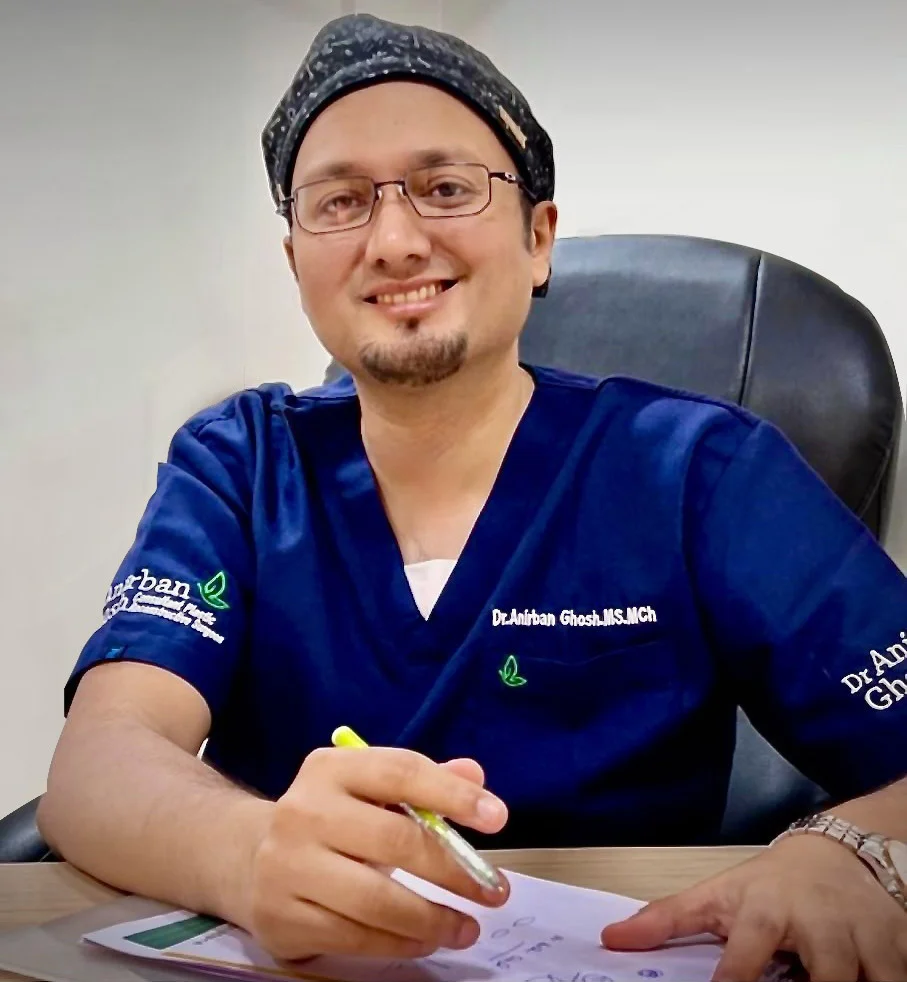
Tummy Tuck Surgeon in Kolkata
Dr. Anirban Ghosh [15+ Yrs of Experience]
Plastic Surgeon in Kolkata
Home / Surgical / Tummy Tuck
What is a Tummy Tuck?
A tummy tuck (abdominoplasty) is a cosmetic surgery that removes excess skin and fat from the abdomen while tightening weakened abdominal muscles. It helps create a flatter, firmer stomach, especially after pregnancy or significant weight loss.
Consult Dr Anirban Ghosh at Anirvana Clinic, Kolkata, for safe, precise, and natural-looking outcomes.

Types of Tummy Tuck
Mini Tummy
Tuck
- What it targets: Lower abdomen (below the navel)
- Duration: 1–2 hours
- Anaesthesia: Local or general anaesthesia
- Recovery time: 1–2 weeks (resume normal routine quickly)
Full Tummy Tuck (Standard Abdominoplasty)
- What it targets: The entire abdomen with muscle tightening
- Duration: 2–4 hours
- Anaesthesia: General anaesthesia
- Recovery time: 2–4 weeks (full recovery may take 6–8 weeks)
Extended Tummy
Tuck
- What it targets: Abdomen + flanks (love handles)
- Duration: 3–5 hours
- Anaesthesia: General anaesthesia
- Recovery time: 3–4 weeks (complete healing in 6–8 weeks)
Circumferential Tummy Tuck (Body Lift)
- What it targets: Abdomen, back, and waistline (360° contouring)
- Duration: 4–6 hours
- Anaesthesia: General anaesthesia
- Recovery time: 4–6 weeks (full recovery may take 8–10 weeks)
Fleur-de-Lis Tummy
Tuck
- What it targets: Vertical + horizontal skin removal (for massive weight loss cases)
- Duration: 3–5 hours
- Anaesthesia: General anaesthesia
- Recovery time: 3–4 weeks (complete healing in 6–8 weeks)
Step-by-Step Guide to Tummy Tuck Surgery
Step-1
Consultation & Evaluation
The surgeon evaluates your abdominal skin, fat, and muscle, then plans surgery.

Step-2
Pre-Surgery
Preparation
You may need to stop smoking, adjust medications, and follow fasting instructions.
Step-3
Anaesthesia Administration
On surgery day, general anaesthesia is given to keep you comfortable and pain-free.
Step-4
Incision
Placement
A horizontal incision is made above the pubic area, hidden under clothing.
Step-5
Removal of Excess Skin & Fat
Excess skin and fat are removed, creating a smoother and firmer contour.
Step-6
Muscle Tightening (Core Repair)
Weakened abdominal muscles are stitched together to restore strength and firmness.
Step-7
Repositioning of the Navel
The belly button is repositioned to ensure a natural look in full tummy tucks.

Step-8
Closing the
Incisions
Incisions are closed with sutures, and compression garments are applied for support.
Benefits of Tummy Tuck Surgery
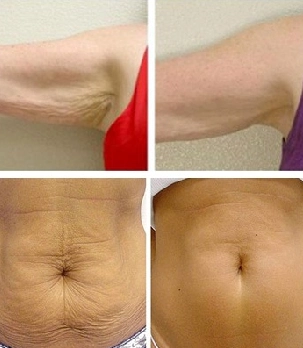
Removes excess loose skin from the abdomen
Tightens weakened or separated abdominal muscles
Creates a flatter, firmer, and more contoured stomach
Improves body shape after pregnancy or major weight loss
Reduces the appearance of stretch marks (especially lower abdomen)
Improves posture by strengthening the core
Helps clothes fit better and look more flattering
Can be combined with liposuction for enhanced results
Why Choose Dr Anirban Ghosh?
About the Surgeon
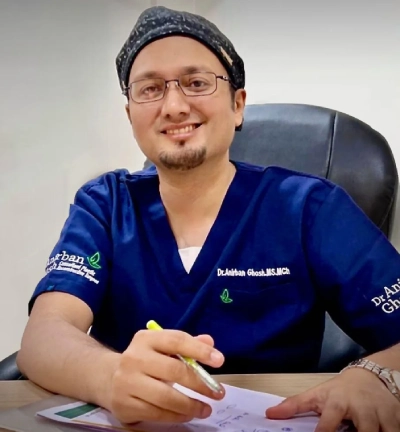
Dr. Anirban Ghosh
- MBBS (Gold Medallist)
- MS (General Surgery)
- MRCS (England)
- MCh (Aesthetic Plastic Surgery)
15+ Years of Experience
in aesthetic & reconstructive plastic surgery
50000+ Patients
Affiliations
- Indian Association of Aesthetic Plastic Surgeons (IAAPS)
- The Association of Plastic Surgeons of India (APSI)
Awards & Recognitions
- Honoured with the Indian Icon Best Healthcare Entrepreneur Award
- Esteemed Recipient of the Rabindra Ratna Puraskar 2025
Tummy Tuck vs Liposuction
| Factor | Tummy Tuck | Liposuction |
|---|---|---|
| Purpose | Removes excess skin + tightens muscles | Removes only fat |
| Skin Tightening | Yes | No |
| Muscle Repair | Yes | No |
| Best For | Loose skin, post-pregnancy abdomen | Stubborn fat pockets |
| Results | Flatter, tighter abdomen | Slimmer contour |
| Recovery Time | 2–4 weeks | 5–10 days |
Recovery Timeline After Tummy Tuck
Day 1 (Surgery Day)
- You’ll be under observation after surgery
- Mild to moderate pain, tightness, and drowsiness are normal
- A compression garment is applied
- You may need assistance to walk or move
Day 2-3
- Swelling and discomfort continue
- You’ll be encouraged to take short, slow walks
- Drain tubes (if placed) may still be present
- Standing fully straight may feel difficult
Day 4–5
- Swelling and bruising are still present but stabilising
- You feel more independent with basic activities
- Drains may be removed (depending on healing)
- Light movement becomes easier
Day 6–7
- Noticeable reduction in discomfort
- You can walk more comfortably, though still slightly bent
- Stitches may be checked or partially removed
- Energy levels improve gradually
Day 8–10
- Bruising starts fading
- You can handle simple daily tasks on your own
- Mild tightness remains in the abdomen
- You may feel ready to resume light work (non-physical)
Day 11–14
- Most swelling begins to reduce
- Walking posture improves (standing straighter)
- Pain is minimal, mostly tightness
- You feel more confident moving around
When is Tummy Tuck Surgery Needed?
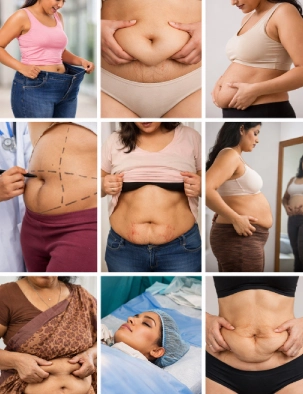
Excess loose or sagging skin after significant weight loss
Stretched abdominal muscles (diastasis recti), especially after pregnancy
Persistent belly bulge that doesn’t improve with diet and exercise
Post-pregnancy abdominal changes (loose skin + muscle weakness)
Visible stretch marks in the lower abdomen with skin laxity
Hanging skin causes hygiene issues or skin irritation
Poor abdominal contour affecting body shape and confidence
Age-related skin looseness in the abdominal area
After bariatric (weight loss) surgery, with excess skin remaining
When liposuction alone cannot correct loose skin or muscle separation
Risks & Safety Measures After Tummy Tuck
Possible Risks
Swelling and bruising that may last for a few weeks
Pain, tightness, or discomfort in the abdominal area
Infection at the incision site
Bleeding or fluid accumulation (seroma)
Delayed wound healing or reopening of stitches
Visible scarring (which usually fades over time)
Numbness or reduced sensation around the abdomen
Asymmetry or uneven contour (rare)
Blood clots (rare but serious)
Reaction to anaesthesia
Safety Measures to Follow
Wear compression garments to reduce swelling and support healing
Take prescribed medications (antibiotics, pain relief) on time
Keep the incision area clean and dry to prevent infection
Avoid heavy lifting, bending, or strenuous activity for a few weeks
Walk gently every day to improve blood circulation and reduce the risk of clots
Sleep in a slightly bent position to avoid strain on stitches
Stay hydrated and follow a balanced, protein-rich diet for faster healing
Avoid smoking and alcohol during the recovery period
Frequently Asked Questions (FAQs)
1. Can a tummy tuck be combined with liposuction?
Yes, it is commonly combined. Liposuction removes stubborn fat, while a tummy tuck tightens skin and muscles—together, they create a more defined and natural-looking abdominal contour.
2. How much weight can you lose with a tummy tuck?
A tummy tuck is not a weight-loss procedure. It removes excess skin and some fat, but the primary goal is body contouring, not reducing overall body weight.
3. When can you return to work after a tummy tuck?
Most patients can return to desk jobs within 2–3 weeks. Physically demanding work may require 4–6 weeks, depending on healing and your surgeon’s advice.
4. Can you get pregnant after a tummy tuck?
Yes, pregnancy is still possible after a tummy tuck. However, it may stretch the abdominal muscles and skin again, which can affect the surgical results.
5. Does fat come back after a tummy tuck surgery?
The removed fat cells do not return. However, remaining fat cells can enlarge with weight gain, so maintaining a stable weight is important to preserve long-term results.