
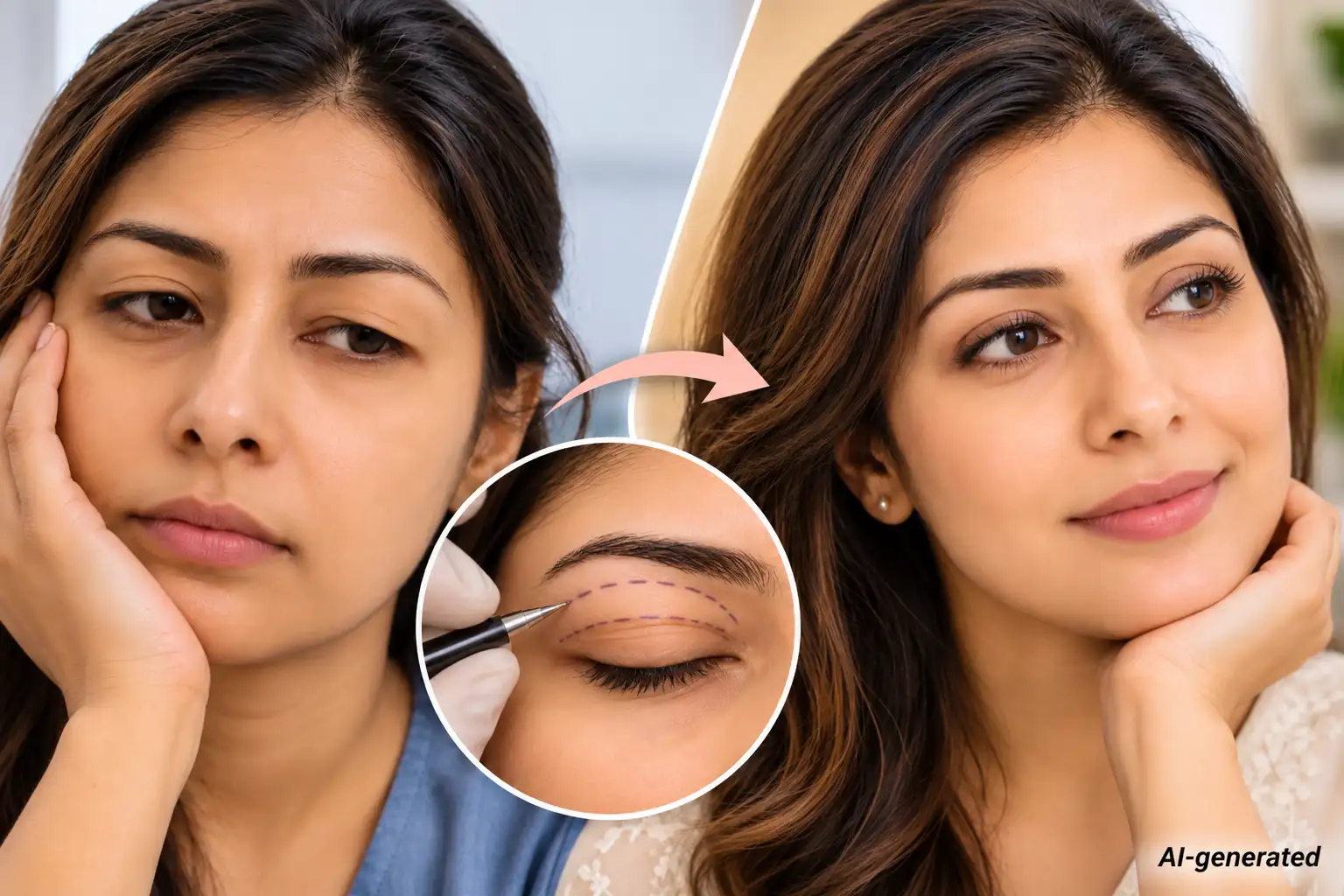
Do your eyes make you look tired, sleepy, or older than you actually feel? Heavy upper eyelids can change your facial expression, even when you are well rested. Fortunately, eyelid surgery for hooded eyes can help restore a more refreshed appearance by addressing excess skin around the upper eyelids.
As we age, the delicate skin around our eyes gradually loses elasticity. Some people also inherit naturally heavy eyelids. A procedure called upper blepharoplasty removes excess skin and, when necessary, adjusts underlying fat to improve the eyelid contour.
But can surgery completely correct hooded eyelids, and will it genuinely make you look younger? Understanding the causes, treatment options, recovery process, and realistic outcomes can help you make an informed decision.
What Makes Eyelids Look Hooded in the First Place?
Hooding develops when excess skin folds over the natural upper eyelid crease, sometimes extending towards the eyelashes.
Several factors contribute to this appearance:
- Ageing: Reduced collagen and elastin gradually make eyelid skin less firm.
- Genetics: Some individuals naturally inherit heavier upper eyelids.
- Sagging skin: Changes in skin elasticity create additional folds around the eyes.
- Brow position: Descending eyebrows can push surrounding tissue towards the upper lids.
Although hooding is primarily a cosmetic concern, severe skin folds may occasionally interfere with peripheral vision.
Importantly, droopy eyelids can have different underlying causes. Identifying the actual problem is essential before choosing surgery.
Is It Hooded Skin, a Low Brow or True Eyelid Drooping?
Not every heavy-looking eyelid requires the same procedure.
Understanding ptosis vs hooded eyes helps distinguish excess upper eyelid skin from weakness or stretching of the muscle responsible for lifting the eyelid.
With skin hooding, the eyelid margin generally remains positioned normally. In true ptosis, the upper eyelid itself sits lower than expected and may partially cover the pupil.
A low eyebrow can also create apparent eyelid heaviness.
In selected cases, a brow lift for hooded eyes may provide better correction than removing eyelid skin alone.
An experienced plastic surgeon examines eyelid movement, eyebrow position, skin quality, and facial proportions before recommending treatment.
How Does the Procedure Remove Extra Skin Above the Eye?
The procedure focuses on removing carefully measured excess tissue while preserving natural eyelid function.
During surgery, the surgeon typically:
- Marks the natural upper eyelid crease.
- Administers local anaesthesia, sometimes with sedation.
- Makes a fine incision along the marked crease.
- Removes excess skin and selectively adjusts fat when required.
- Closes the incision using delicate stitches.
The incision is positioned within the natural eyelid fold, helping conceal the healed line when the eyes are open.
The procedure is commonly performed as day surgery, although individual requirements vary.
Careful surgical planning is particularly important because excessive skin removal can affect comfortable eyelid closure.
Will It Really Make You Look Younger?
For suitable candidates, eyelid surgery for hooded eyes can create a noticeably fresher appearance without dramatically changing facial identity.
Removing redundant upper eyelid skin may reveal more of the natural eyelid contour, making the eyes appear less heavy.
This form of eye rejuvenation can also improve facial harmony, particularly when upper eyelid ageing is the main concern.
However, surgery does not eliminate every sign of facial ageing. Fine wrinkles, dark circles, eyebrow descent, and skin pigmentation may remain.
The goal should be natural improvement rather than an unrealistic transformation.
A successful result generally makes someone look more rested, not noticeably operated upon.
Can It Be Combined With Other Treatments for Better Results?
Sometimes upper eyelid correction alone cannot address every concern around the eyes.
For example, under-eye bags may require lower eyelid surgery when prominent fat deposits or excess skin are present.
Depending on individual anatomy, surgeons may also discuss complementary treatments:
- Botox: May soften selected expression lines around the eyes.
- Dermal fillers: Can address certain volume-related concerns when appropriate.
- Facial rejuvenation procedures: May improve other age related changes affecting overall facial balance.
Combination treatments are not automatically necessary.
Each option carries separate benefits, limitations, and potential complications. Treatment planning should prioritise safety and anatomical suitability rather than the number of procedures performed.
How Long Does Healing Take? A Day-by-Day Timeline
Understanding eyelid surgery recovery helps patients prepare for temporary changes following the procedure.
Healing varies according to surgical technique, individual health, and postoperative care.
The First Two Days
Mild discomfort, tightness, puffiness, and temporary discolouration are common immediately after surgery.
Swelling and bruising after eyelid surgery often become more noticeable during the first 48 hours.
Surgeons may recommend cold compresses, head elevation, prescribed medication, and avoiding unnecessary eye rubbing.
Days Three to Seven
Swelling usually begins improving gradually, although bruising may remain visible.
Stitches are commonly removed within approximately five to seven days, depending on the closure technique.
Patients should avoid strenuous exercise, heavy lifting, and activities that place unnecessary pressure around the eyes.
Week Two and Beyond
Many patients feel comfortable returning to routine social activities within approximately 10 to 14 days.
Residual swelling can persist longer, and the final eyelid contour may take several weeks or months to settle.
Following postoperative instructions remains essential throughout healing.
Will Scars Show and How Long Do the Results Last?
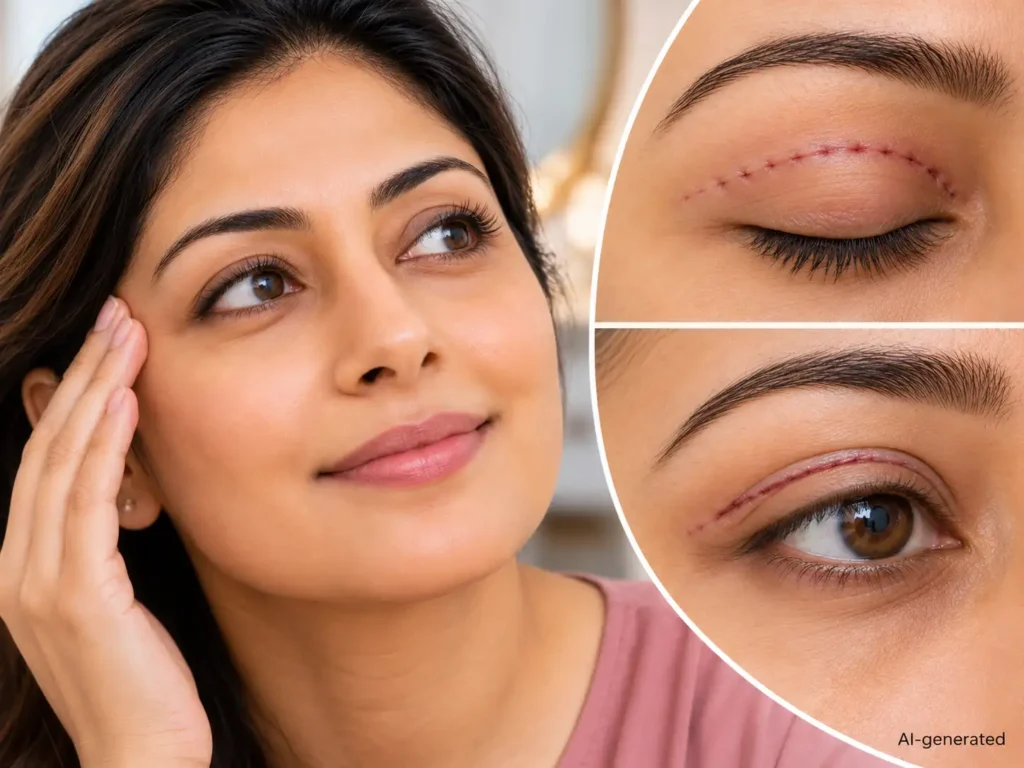
One common concern involves visible eyelid surgery scars.
Because the incision usually follows the natural upper eyelid crease, the resulting line is often discreet once healing progresses.
Initially, the incision may appear pink or slightly raised. It generally softens and fades over several months, although scar maturation can continue for up to a year.
Results often remain noticeable for many years.
However, surgery cannot stop natural ageing, and further skin relaxation may occur over time.
Sun protection, healthy habits, and appropriate skincare can support long term appearance.
Who Is a Good Candidate and Who Should Wait?
Suitable candidates generally have excess upper eyelid skin, realistic expectations, and good overall health.
Before recommending surgery, the surgeon should assess medical history, eye health, medication use, and possible healing risks.
People with uncontrolled medical conditions, significant dry eye symptoms, or certain eye disorders may need additional evaluation or treatment before proceeding.
Patients expecting complete removal of wrinkles or permanent prevention of ageing may also need clearer counselling.
A thorough health screening and honest candidacy assessment help determine whether surgery is appropriate.
How Do You Know Your Eyelid Procedure Is in Safe Hands?
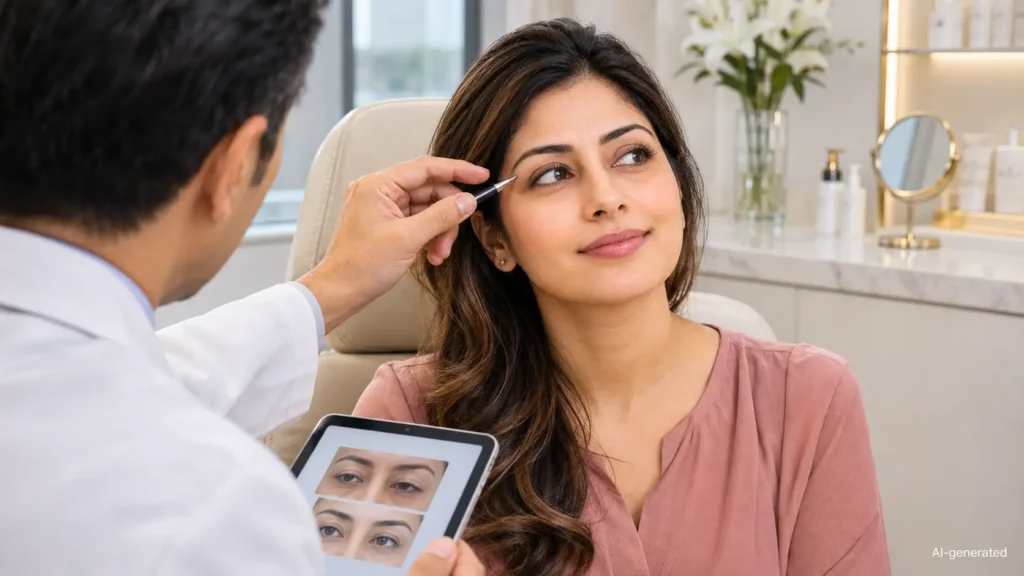
Choosing a qualified eyelid surgeon requires more than comparing photographs or treatment costs.
Look for appropriate surgical qualifications, experience with facial anatomy, clear communication, and access to suitable operating facilities.
Anirvana Clinic, led by Dr Anirban Ghosh, provides personalised plastic surgery consultations focused on individual concerns and treatment suitability.
Dr Anirban Ghosh holds an MCh qualification in Plastic Surgery, and surgical care can be planned using Manipal Hospitals facilities where appropriate.
Consultations should include an honest assessment of candidacy, expected outcomes, potential complications, and available alternatives.
Patients should feel comfortable asking questions before making a decision.
Open Your Eyes to a Fresher, More Rested Look
Heavy upper eyelids can influence both facial appearance and everyday confidence.
For appropriately selected patients, eyelid surgery for hooded eyes can reduce excess skin and create a naturally refreshed look.
However, successful treatment depends on identifying the underlying cause, choosing the correct procedure, and maintaining realistic expectations.
If you are considering treatment, consult an experienced eyelid surgeon in Kolkata for a personalised evaluation.
People Also Ask
1. Can eyelid surgery fix hooded eyes permanently?
Surgery removes existing excess skin and can deliver long lasting improvement. However, natural ageing continues, so some skin relaxation may develop again over time.
2. At what age should you get surgery for hooded eyes?
There is no universally ideal age. Treatment depends on individual anatomy, symptoms, overall health, and personal goals rather than age alone.
3. Is eyelid surgery painful, and is it done under local anaesthesia?
The procedure is frequently performed under local anaesthesia, sometimes with sedation. Patients may experience pressure during treatment and temporary mild discomfort afterwards.
4. How long does swelling last after eyelid surgery?
Most noticeable swelling generally improves within one to two weeks. Minor residual puffiness may take several additional weeks to resolve completely.
5. Can hooded eyes be treated without surgery?
Non surgical treatments may improve selected wrinkles, skin quality, or eyebrow position. However, they cannot reliably remove substantial excess upper eyelid skin.
