

Living with discomfort caused by heavy breasts can affect daily activities, posture, confidence, and overall quality of life. Breast reduction surgery is a procedure that may help reduce the physical strain caused by excess breast tissue. Many women experiencing large breasts related back pain often try posture correction, exercises, or pain management methods before considering surgical options.
Breast size is not only a cosmetic concern. Excess breast weight can place continuous pressure on the neck, shoulders, and upper back muscles. Over time, this may contribute to chronic discomfort, posture changes, and limitations in physical activities. Understanding the causes of this pain and knowing when surgery may help can support better decision-making.
How Heavy Breasts Cause Chronic Pain
Breasts that are disproportionately large compared to the body frame can create ongoing mechanical stress. The additional weight pulls the shoulders forward and changes the natural alignment of the spine. This imbalance forces the back and neck muscles to work harder to maintain posture.
Many women with large breasts experience discomfort because the body constantly compensates for the extra weight. This can lead to:
- Forward rounding of the shoulders
- Increased pressure on the upper back muscles
- Spine alignment changes
- Muscle fatigue during daily activities
These posture problems may become more noticeable while standing for long periods, exercising, or performing routine tasks. Over time, the strain can contribute to recurring pain that affects work, sleep, and mobility.
What Is Macromastia, and Are You Dealing With It?
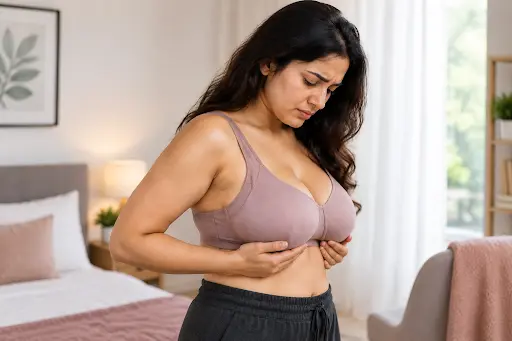
Macromastia refers to excessively large breasts that may cause physical symptoms beyond normal breast size concerns. Women experiencing this condition may notice discomfort that impacts their daily routine.
Common macromastia symptoms include:
- Persistent back, neck, or shoulder discomfort
- Deep grooves from bra straps due to breast weight
- Skin irritation or rashes beneath the breast fold
- Difficulty finding supportive clothing
- Headaches linked to muscle tension
- Tingling or numbness in fingers due to nerve pressure
- Reduced ability to exercise comfortably
Not every woman with larger breasts requires surgery. However, when breast size contributes to ongoing physical symptoms, a medical evaluation can help determine whether female breast reduction may provide relief.
The Link Between Breast Weight and Neck & Shoulder Pain
The relationship between breast weight and upper body discomfort is mainly due to continuous strain on muscles, nerves, and supporting structures.
Women experiencing neck and shoulder pain due to heavy breasts often describe a pulling sensation around the shoulders and upper back. The weight of the breasts can increase tension in the trapezius muscles, which support the neck and shoulder region.
This additional strain may cause:
- Muscle tightness and fatigue
- Restricted neck movement
- Shoulder pressure from bra straps
- Upper back soreness
- Nerve-related symptoms in some cases
When the body constantly adjusts to manage extra breast weight, pain may become persistent. This is why breast reduction is considered not only a cosmetic procedure but also a possible solution for physical discomfort related to breast size.
How Does Breast Reduction Surgery (Reduction Mammoplasty) Actually Help?
Reduction mammoplasty is a surgical procedure that removes excess breast tissue, fat, and skin to reduce breast volume. The goal is to create a breast size that is more balanced with the body structure while improving physical comfort.
During the procedure, a plastic surgeon removes carefully measured amounts of tissue and reshapes the remaining breast. By reducing the overall weight, the pressure placed on the spine, shoulders, and neck may decrease.
The possible benefits include:
- Reduced strain on back and shoulder muscles
- Improved posture support
- Greater comfort during physical activities
- Easier movement and exercise
- Better-fitting clothing and bras
Breast reduction focuses on both physical relief and proportion. It is different from procedures like breast augmentation, which increases breast volume, or a breast lift, which mainly improves breast position without significantly removing tissue.
Women interested in understanding the procedure can explore more about breast reduction surgery and how it differs from other breast procedures.
Are You a Good Candidate for Breast Reduction?
Breast reduction candidacy depends on several factors, including symptoms, health status, and personal goals. The procedure is generally considered for women who experience ongoing physical problems related to breast size.
You may be considered a suitable candidate if you have:
- Chronic back, neck, or shoulder discomfort
- Difficulty with daily activities due to breast weight
- Skin irritation beneath the breasts
- Limited exercise ability
- Symptoms that continue despite physiotherapy or posture correction
A consultation with an experienced surgeon helps evaluate breast size, body proportion, medical history, and expectations. Factors such as overall health, BMI, smoking status, and healing ability may also influence surgical planning.
Breast reduction is not based only on breast size. The decision depends on whether breast weight creates physical challenges and whether surgery can provide meaningful improvement.
What Does Recovery Look Like After Surgery?
Understanding breast reduction recovery helps patients prepare for the healing process. Recovery experiences can vary depending on individual health, surgical technique, and the amount of tissue removed.
In general:
- Mild discomfort and swelling may occur during the initial days
- Supportive compression garments may be advised
- Light activities can usually resume gradually
- Strenuous exercise and heavy lifting may require temporary restriction
Many patients notice improvement in posture-related discomfort as the body adjusts to the reduced breast weight. Complete healing and scar maturation take time, and regular follow-up appointments help monitor recovery.
Following post-operative instructions carefully plays an important role in achieving safe and satisfactory results.
Why Choose an Experienced Plastic Surgeon for This Procedure

Choosing an experienced plastic surgeon is an important step when considering breast reduction. The procedure requires careful planning to achieve a balance between symptom relief, breast shape, and safety.
A qualified breast reduction doctor evaluates whether surgery is appropriate and provides an honest assessment of expected outcomes. At Anirvana Clinic, I focus on personalised treatment planning, patient safety, and selecting suitable procedures based on individual needs.
An experienced surgeon considers:
- Medical history and symptoms
- Breast proportion and body structure
- Surgical goals and expectations
- Safe techniques for tissue removal and reshaping
You can learn more about my experience and approach through the About page.
Get in Touch
Living with constant discomfort from heavy breasts can affect physical comfort and daily confidence. For women experiencing persistent symptoms, breast reduction may be considered as a chronic pain relief surgery option after proper evaluation.
At my clinic, I focus on understanding each patient’s concerns before recommending any procedure. I believe the right treatment starts with a detailed consultation, realistic expectations, and a personalised approach.
Want to undergo breast reduction in Kolkata?
Reach out today.
People Also Ask
1. How much pain relief can you expect after breast reduction surgery?
Many patients experience reduced strain-related discomfort after surgery. The level of improvement depends on individual symptoms, body structure, and recovery.
2. How long does it take to recover from breast reduction surgery?
Initial recovery usually takes a few weeks, while complete healing and scar improvement may continue over several months.
3. Is breast reduction surgery only for very large breasts?
No. Surgery may be considered when breast size causes physical symptoms or functional difficulties, regardless of a specific size.
4. Can physiotherapy alone fix back pain from heavy breasts, or is surgery necessary?
Physiotherapy and posture correction may help some women. However, if excess breast weight continues to cause symptoms, breast reduction may be considered after medical evaluation.