Phimosis is one of those conditions men quietly live with for years before ever mentioning it to a doctor. A foreskin that won't retract properly might sound minor, but it rarely stays that way — painful urination, recurring infections, discomfort during intercourse, and a hygiene struggle that never really goes away. For a lot of men, embarrassment keeps them from seeking help until the problem is unavoidable.
Treatment has moved far beyond the traditional surgery most people picture. Stapler circumcision for phimosis has become the go-to option — faster, cleaner, and easier to recover from. But does it actually work as well as it sounds? Let's find out.
What Is Stapler Circumcision?
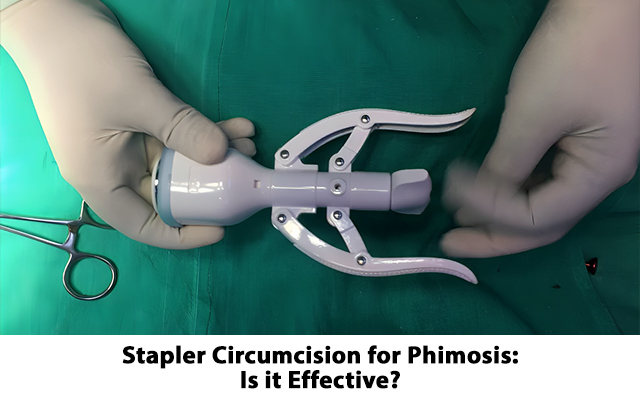
Stapler circumcision is a modern surgical technique that removes the tight foreskin using a specialised circular device. Instead of the multiple manual cuts and stitches used in traditional circumcision, this stapler cuts and seals the tissue in a single, controlled motion — which is exactly why it produces such uniform, clean results. It's this precision that's made stapler circumcision in Kolkata an increasingly preferred option among patients researching modern alternatives to traditional surgery.
The most widely used version of this technology is the ZSR stapler circumcision technique, a disposable circular stapler system that has become the preferred method among surgeons for its precision and consistency. The entire procedure typically takes 15 to 30 minutes and is done under local anaesthesia, with sedation available for patients who prefer it.
Circumcision without stitches means less trauma, less downtime, and a much simpler recovery process compared to what most people expect.
Why Is It Preferred Over Traditional Surgery?
- Less Pain: Because the device works quickly and seals as it cuts, there's significantly less trauma to the surrounding tissue.
- Minimal Bleeding: Cutting and sealing happen simultaneously, which keeps blood loss to a minimum.
- Faster Healing: Most patients see basic healing within 7 to 10 days, with full recovery in two to three weeks.
- Better Cosmetic Outcome: The circular, uniform cut leaves a neater result with far less visible scarring.
- Lower Risk of Infection: Shorter surgical time and reduced tissue handling mean fewer post-operative complications, along with a genuinely same-day discharge circumcision experience for most patients.
For patients with phimosis, this method can be life-changing, especially for those who delay treatment due to fear of pain or long recovery periods.
Is It Effective for Phimosis?
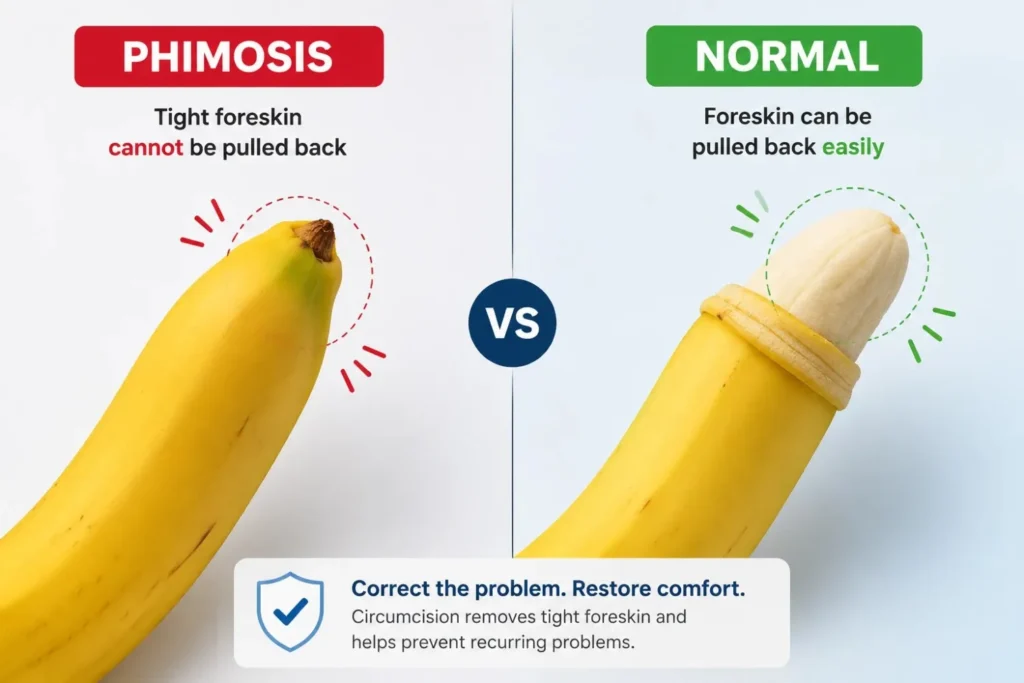
Yes — and consistently so. Stapler circumcision completely removes the tight, restrictive foreskin, which resolves the root cause of phimosis rather than just managing the symptoms temporarily. Because the procedure addresses the actual structural issue, patients don't just get short-term relief — the underlying problem is gone.
It's particularly effective for adults who've been dealing with recurring infections, pain during intercourse, or ongoing hygiene concerns that haven't responded to creams, stretching exercises, or other conservative treatments. For many, this is the point where years of managing symptoms finally gives way to an actual fix, rather than another temporary workaround.
Adult circumcision recovery with this technique tends to be far less disruptive than most patients expect, which is a big part of why more men are finally choosing to treat a condition they'd otherwise ignore for years. The combination of a quick procedure and a manageable recovery timeline removes two of the biggest reasons men put off treatment in the first place.
What often gets overlooked is the impact beyond the physical symptoms. The results aren't just physical — many patients report a noticeable, sometimes significant improvement in confidence and overall quality of life once the discomfort and anxiety around the condition are finally behind them. Everyday things that used to cause hesitation — intimacy, hygiene routines, even just physical comfort throughout the day — stop being a source of stress. It's a change that's hard to quantify on paper, but one that patients consistently describe as one of the more meaningful outcomes of the procedure.
Conclusion
If you've been living with phimosis and putting off treatment because the idea of surgery feels overwhelming, stapler circumcision offers a genuinely different experience — quicker, less painful, and with a recovery timeline that fits into real life. It combines modern surgical precision with a level of comfort that traditional circumcision simply doesn't offer.
Ready to stop living with the discomfort? Consult Dr. Anirban Ghosh at Anirvana Clinic to find out if this procedure is right for you. Early treatment means fewer complications and a much faster path back to a normal, comfortable life.
Frequently Asked Questions
- Is stapler circumcision painful?
Most patients experience significantly less pain than with traditional circumcision. The procedure is done under local anaesthesia, and any post-operative discomfort is typically mild and manageable with prescribed medication. - How long does recovery actually take?
Basic healing usually happens within 7 to 10 days, with staples naturally falling off in that window. Full recovery, including a return to all normal activities, generally takes 2 to 3 weeks. - Is stapler circumcision suitable for adults with long-standing phimosis?
Yes — it's particularly well-suited for adults dealing with recurring infections, pain, or hygiene issues that haven't improved with other treatments, since it fully resolves the underlying tight foreskin. - What makes ZSR stapler circumcision different from other techniques?
The ZSR method uses a disposable circular stapler that cuts and seals the tissue in one step, offering more uniform results and shorter procedure times compared to other stapler or manual techniques. - When can I return to work or normal activity after the procedure?
Most patients resume light activities within 2 to 3 days and are back to their full routine, including work, within a week to ten days, depending on individual healing.