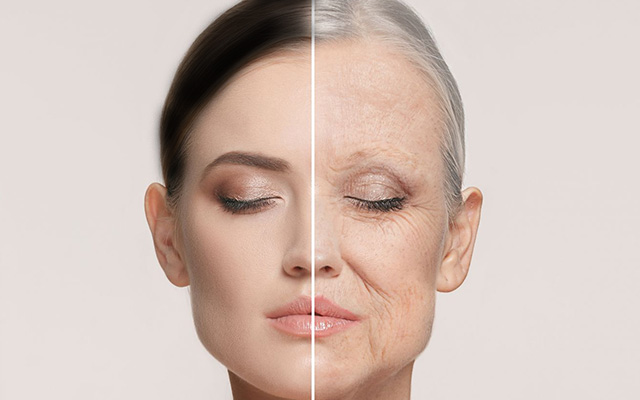
Your face can look older even when your skin looks healthy, smooth, and well cared for. The reason often lies deeper than wrinkles or skincare concerns. Changes in facial fat, bone structure, and tissue support gradually affect your facial shape and volume. This hidden process, known as structural facial ageing, plays a major role in how youthful or tired your face appears over time.
Have You Ever Wondered Why You Look Older Despite Having Good Skin?
Do you often think, “Why does my face look older when my skin still looks healthy?” You may follow a good skincare routine, protect your skin from the sun, and maintain a healthy lifestyle, yet your face may appear more tired, hollow, or less defined than before.
The reason is often not just about wrinkles or skin texture. The deeper changes happening beneath the skin can significantly affect how your face ages. This process is known as structural facial ageing, and it explains why some people notice changes in facial shape even when their skin quality remains good.
Understanding the facial ageing process explained through these deeper changes can help you recognise what is actually happening and what options may help restore a balanced, refreshed appearance.
What Is Structural Facial Ageing?
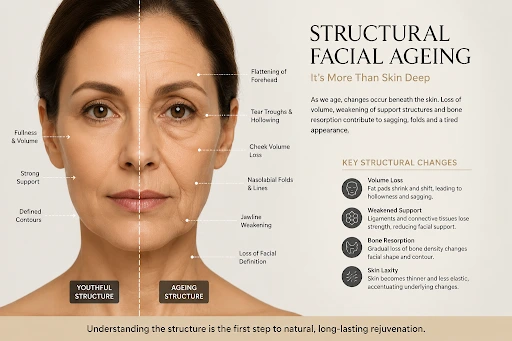
Structural facial ageing refers to the changes that happen beneath the skin over time, involving facial fat, bones, muscles, and supporting tissues. As we age, the foundation that gives the face its youthful shape gradually changes.
Unlike surface-level concerns such as fine lines or pigmentation, structural ageing affects facial volume, contours, and proportions. It is one of the main reasons someone may look tired, older, or less refreshed despite having healthy-looking skin.
How Is It Different from Skin Ageing?
Skin ageing mainly involves changes such as wrinkles, dryness, reduced elasticity, uneven tone, and sun damage. These concerns are visible on the outer layer of the face.
Structural ageing happens deeper. It involves facial volume loss, changes in facial fat distribution, gradual bone loss in face ageing, and weakening of the tissues that support facial contours.
Both processes happen together, but they require different approaches. Treating only the skin may improve texture, but it may not restore lost facial structure.
Why Does Everyone Focus on Skin and Ignore This?
Most anti-ageing discussions focus on creams, serums, and skincare because these are visible parts of ageing. However, the shape and youthful appearance of the face depend heavily on what happens underneath.
This is why some people feel that their skin looks fine but their face looks old. The issue may not be the quality of the skin but the changes happening beneath it.
What Actually Happens Beneath Your Skin as You Age?
The face is supported by a complex structure of fat compartments, bones, muscles, and ligaments. With age, these components gradually change, affecting facial balance and definition.
Many people notice these changes as gradual loss of fullness, deeper shadows, or a less sculpted facial appearance.
Treatments focused on restoring lost volume, such as a face rejuvenation approach, aim to address these deeper concerns rather than only improving surface appearance.
How Does Facial Fat Loss Contribute to an Aged Look?
Facial fat plays an important role in maintaining youthful contours. It provides softness, fullness, and support to areas such as the cheeks, temples, and under-eye region.
With ageing, facial fat loss ageing occurs as fat compartments reduce in size or shift downward. This can create hollow areas, flattened cheeks, deeper folds, and a tired appearance.
Loss of facial volume is one of the major facial volume loss causes. Factors such as genetics, lifestyle, sun exposure, and natural ageing can influence how quickly these changes appear.
How Does Bone Resorption Change Facial Shape?
Many people are surprised to learn that bones also change with age. Gradual reduction in facial bone volume can affect the framework that supports the skin and soft tissues.
Bone loss in face ageing can contribute to changes around the cheeks, jawline, and eye area. As the foundation becomes less prominent, the overlying tissues may appear looser or less supported.
What Role Do Facial Ligaments Play in Sagging?
Facial ligaments act like support structures that hold tissues in place. Over time, these supporting structures may become less firm, allowing facial tissues to descend.
This contributes to changes such as cheek flattening, deeper folds, and reduced jawline definition.
What Are the Signs of Structural Ageing You Might Be Missing?
Structural ageing does not always appear as obvious wrinkles. Sometimes, the first signs are changes in facial shape and proportion.
Why Do Cheeks Flatten Over Time?
Youthful cheeks usually have natural fullness and gentle curves. As facial fat decreases and shifts, cheeks may appear flatter or less lifted.
This can make the face look tired even when a person feels energetic and healthy.
Why Do Under-Eye Hollows Appear Even When You’re Well-Rested?
Under-eye hollows are not always caused by lack of sleep. Changes in fat volume and support around the eye area can create shadows and a sunken appearance.
This is why someone may appear exhausted despite getting proper rest.
Why Does the Jawline Lose Definition?
A sharper jawline depends on skin quality, fat distribution, and underlying facial structure. With age, changes in these areas can make the jawline appear softer or less defined.
These changes are natural but can often be addressed with suitable facial rejuvenation treatments.
At What Age Does Structural Ageing Actually Begin?
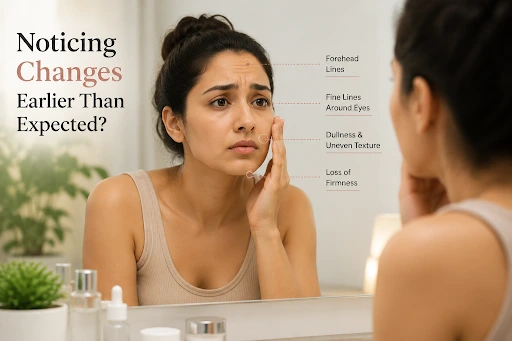
Structural ageing does not begin at one fixed age for everyone. Subtle changes may start as early as the late 20s or early 30s, although they usually become more noticeable with increasing age.
Genetics, lifestyle habits, sun exposure, weight changes, and individual facial structure all influence how quickly these changes appear.
Why Don’t Skincare Products or Creams Fix This Problem?
Skincare products can improve skin quality, hydration, texture, and surface concerns. However, creams cannot replace lost facial volume or rebuild changes in underlying structures.
For example, a good skincare routine may improve fine lines, but it cannot restore reduced facial fat or changes caused by deeper structural ageing.
This is where treatments such as a volume restoration procedure can be considered for people looking to address changes beneath the skin.
How Can Fat Grafting and Volume Restoration Reverse Structural Ageing?
Fat grafting focuses on restoring lost facial volume by using the patient’s own fat to improve areas that have become hollow or depleted over time.
A personalised fat grafting approach can help restore facial balance, improve contours, and create a more refreshed appearance while maintaining natural-looking results.
What Does the Procedure Involve?
During fat grafting, fat is collected from another area of the body, processed, and carefully placed into areas where volume restoration is needed.
The goal is not to change someone’s identity but to restore proportion and improve signs associated with facial volume loss.
How Long Do Results Typically Last?
Results can vary depending on individual factors, lifestyle, and how the body responds. A portion of transferred fat can provide long-lasting improvement, while some volume may naturally reduce over time.
A detailed consultation helps determine whether fat grafting, dermal fillers, or another approach may be more suitable.
Why Does Choosing the Right Specialist Matter for This Kind of Treatment?
Structural ageing involves multiple layers of facial anatomy, so understanding facial proportions and balance is essential. The right specialist evaluates bone structure, fat distribution, skin quality, and overall facial harmony before suggesting any treatment.
What Should You Do Next?
Looking older does not always mean your skin needs more products. Sometimes, the changes are happening deeper within the facial structure.
Understanding structural facial ageing can help you make informed decisions about treatments designed to restore lost volume and improve facial balance.
If you are noticing hollow cheeks, under-eye shadows, or reduced facial definition, consulting a qualified expert can help you explore suitable options. Dr Anirban Ghosh, a reputed plastic surgeon in Kolkata, at Anirvana Clinic offers personalised facial rejuvenation solutions designed around natural-looking outcomes.
Schedule a consultation today.
People Also Ask
- Why does your face look older even though your skin is healthy?
Your face may look older because of deeper structural changes such as facial volume loss, changes in fat distribution, and reduced support from underlying tissues.
- What causes facial volume loss?
Facial volume loss can happen due to natural ageing, genetics, lifestyle factors, weight fluctuations, and gradual changes in facial fat compartments.
- At what age does facial ageing actually start?
Facial ageing can begin gradually from the late 20s or early 30s, but visible changes vary from person to person.
- Is facial ageing caused by fat loss or bone loss?
Both can contribute. Facial fat loss affects fullness, while bone changes affect the foundation that supports facial tissues.
- Can skincare or anti-ageing creams fix structural facial ageing?
Skincare can improve the appearance and health of the skin but cannot restore deeper structural changes such as lost volume.
- What is the difference between skin ageing and structural ageing?
Skin ageing affects the outer layer, causing wrinkles and texture changes. Structural ageing affects deeper facial support systems, including fat, bone, and ligaments.
- How do you know if you need fillers or fat grafting?
A specialist can assess your facial structure, volume loss, and desired outcome to recommend whether fillers, fat grafting, or another treatment is appropriate.
- Is fat grafting a permanent solution for facial ageing?
Fat grafting can provide long-lasting results, although outcomes vary depending on individual healing and natural ageing.
- How much does facial fat grafting cost in Kolkata?
The cost depends on factors such as the treatment area, technique used, and individual requirements. A consultation is needed for accurate assessment.
- Is fat grafting surgery painful or does it require downtime?
Fat grafting is performed with anaesthesia, and some swelling or recovery time may be expected. Your specialist will explain the recovery process based on your procedure.